10 March 2014

Breathing Practice? But I Know How to do That Already!

Continuing the series of brief overviews into the eight parts or "limbs"of yoga, this week I'm up to number 4 - Pranayama. 

Prana is your life-force energy and Yama means to regulate or control, so Pranayama is the practice of regulating your breath and therefore your energy.

Breathing is so simple that you probably don't think about it much at all, so why does it play such an important part in yoga?

Pranayama often forms part of a yoga class because of its centering and grounding effect. Counting and directing the breath gives the mind something to focus on, and then the busy thoughts that are almost constantly present can start to quieten down. As you breathe slowly and smoothly you start to notice a feeling of space in the body and the mind - a lovely sense of stillness and harmony.  Once you have "tuned in" to the rhythm of your breath, you can use it to help you with your yoga poses.  Breathing in, you stretch and lengthen the body and breathing out, you soften and relax. The breath becomes a guide - not just in your yoga practice but in the rest of your life too. When you are stressed the breath will shorten and become irregular and when you are comfortable and relaxed the breath is steady and smooth.

As well as leaving you feeling calm yet energised, the practice of Pranayama has many other benefits, including the following: 

  • lengthening the exhalation stimulates the para-sympathetic nervous system which encourages relaxation and reduces anxiety,
  • it lowers blood pressure,
  • it lowers the heart rate,
  • it improves asthma,
  • it improves circulation and therefore the flow of oxygen around the body,
  • it reduces muscular tension.
There are many different types of Pranayama practice, some of which you will come across in your yoga class, including Nadi Shodhana (Alternate Nostril Breathing), Sama Vritti Pranayama (Equal Breath) and Viloma (Three-Part Breath). It is recommended that you learn Pranayama techniques under the guidance of a qualified yoga teacher as some, such as Bhastrika (Bellows Breath), are very powerful and not suitable for those with very high or very low blood pressure, or during pregnancy.

Did you know  that 10,000 litres of air move in and out of your lungs each day? Take a look here at this informative article from the British Lung Foundation about how your lungs work. 

And read this article too from The Huffington Post for more on how good breathing can help you not just in your yoga practice, but in your everyday life too.


This Week I am Visiting... RHS Garden Wisley, Surrey

I spent a lovely afternoon in the sunshine on Friday wandering round the Royal Horticultural Society's flagship site at Wisley in Surrey. Spread over 240 acres, the garden has lots to offer whether you're a gardener or not. 


The state-of-the art glasshouse is one of the main attractions at Wisley.  It is home to plants from around the world ranging from tropical plants from the jungle to cacti from the desert. 

There's always something interesting to look at each season: there are wonderful herbaceous borders in the summer, the many varieties of trees are ablaze with colour in the autumn, in winter the structure of the garden is revealed and right now the spring bulbs are in flower. 

There is really good Plant Shop which has a huge range of plants (you can often find more unusual specimens here) and, of course, a gift shop with an extensive book section. There are a number of cafes around the garden but they are a little expensive and the entrance fee to the garden isn't cheap either at £12.20. If you know someone who is a member, go with them as you'll get in free as their guest.  

Visiting Wisley will also inspire you to get out in your own garden and get planting for a colourful summer. For more information about RHS Wisley click here. 


This week I am making... Flourless Banana Pancakes

Oooh, these are good!  Surprisingly so, as I wasn't sure about the "flourless" bit! They are so very simple to make and very healthy too.

These pancakes have just two ingredients - bananas and eggs - making them an ideal breakfast for those on a gluten free diet.  I added a pinch of cinnamon to the mixture for a little extra flavour and served them with some Greek yoghurt, maple syrup and blueberries, which made for a good balance of protein and vitamins.
To make 2 pancakes you will need:

1 ripe banana
2 eggs
A little oil for frying (I used coconut oil)
Optional extra: pinch of cinnamon
Mash the banana with a fork.  In another bowl whisk the eggs. Add the cinnamon to the eggs. Add the mashed banana and mix together. Heat a little oil in a pan. Pour in enough mixture to make a small pancake. Let the mixture set for a couple of minutes. Check underneath to see if it is lightly browned, then flip the pancake over and cook the other side. Serve with your favourite fruit and yoghurt.


This week I am growing... Dahlias

I love dahlias. They fill the garden with their jewel-like colours and flower non-stop from the beginning of July until the first frosts. They make really good cut flowers to bring in to the house as they last for ages in a vase and, if you keep picking them, they will go on producing new flowers for weeks on end.
One of Sarah Raven's dahlia collections
Dahlias need a little TLC to get going as they don't like frost, but from the end of May they are quite easy to maintain. They are available to buy from garden centres now or from my favourite website www.sarahraven.com in the form of tubers. These strange-looking, potato-like things are the roots which, when planted in compost will produce shoots and grow into bushy plants. They cost between £1.99-£3.99 each, depending on the variety.

Here's how to plant up your dahlia tubers:
  • Fill a 2 litre pot half full of general purpose compost.
  • Place the tuber carefully on top of the compost.  You will see a central stem to which the individual tubers are attached - make sure this is pointing upwards.
  • Cover with more compost so that the tubers are just under the surface.
  • Water well and label them.
  • Place the pot in a frost free place which has good light, such as a greenhouse or by the window in a shed.
  • Water regularly to keep the compost moist.
  • When they have grown to about 10cms high, pinch out the tips of the shoots.  This sounds harsh but it will encourage the plant to send out side shoots and will make it much stronger and bushier.
The tuber and it's stem

Cover the tuber with compost
After the first frosts of winter, the leaves of the plant will go black and then you will have to make a decision: will you take a chance and leave the tubers in the ground in the hope that they will survive, or will you dig them up and over-winter them inside?  I take the first option as my garden is very free draining. I place an upturned flowerpot filled with compost over the remains of the plant to protect the tubers from the cold and wet, but I always buy some new tubers each spring as an insurance policy. If you decide to dig the tubers up you will need to store them in a dry shed or garage in a tray filled with dry compost, and then plant them up as above next spring. I'll let you know soon if my dahlias have survived our sodden winter - fingers crossed! 

3 March 2014

Asanas - The Postures of Yoga

If you're a regular reader of this blog, you'll have seen my last two posts which give an overview of the first two limbs of yoga (scroll down for a look).  You'll know that, centuries ago, the sage Patanjali wrote a text on yoga which divided the practice of yoga into 8 parts or "limbs" as a guide for enlightened living. Asanas - the postures that you do in your yoga practice - are the third limb.  

To live life in the most balanced way the body needs to be as healthy as possible.  The Asanas strengthen and stretch the body completely while allowing the mind and nervous system to be quiet - something that is rare in our busy, hectic culture.  In this quiet space, you can really feel how each posture is affected by your breathing and the careful placement and alignment of the body.  

A varied Asana practice moves the body through its range of movement, builds up muscle tone and strengthens bones.  As the body grows stronger, you notice that the poses you found challenging when you first started yoga are now done with less effort and more ease. This knowledge that your practice is evolving is empowering - you have self-belief.  

At the same time that your body is growing stronger, it is also becoming more flexible.  The Asanas stretch the muscles and connective tissues, reducing aches, pains and tension.  The postures teach you how to breathe so that the muscles relax and, again, they invite you to be in the space where the mind is quiet. 

The goal isn't to make your yoga postures perfect, but to be fully present, experiencing how the body feels in each pose. With regular practice, movement of the body becomes free and easeful, and this feeling of light energy becomes the natural way of being.  

This Week I am Visiting... Pinnock's Coffee House in High Street, Ripley, Surrey

This cafe is a bit different. It has a whole range of coffees to choose from with enticing descriptions such as Finca Santa Maria from Honduras which has flavours of dark chocolate, nuts and tropical fruit and Grumpy Mule from Bolivia which is caramelly and nutty.  I was a bit of a heathen and asked for a decaf cappuccino before I realised what a fabulous menu there was! The coffee is made by a special process in which it slowly drips through filter papers to give it a really smooth taste.  If you're not one for coffee, they serve an array of teas and hot chocolates, and offer delicious cakes, breakfasts and lunches too.  
Downstairs
Pinnock's has a lovely ambience.  It is in a beautiful, old building with wooden floors and beams, and the upstairs is furnished with squashy armchairs and sofas so you can really get comfortable. The staff are really friendly and made me feel very welcome, and I will be going back next week to try another interesting blend of coffee.  My photos don't really do this lovely place justice, so take a look at their website here where they have lots of their own to show you what it is like. 
Upstairs

This Week I am Making... Coconut Porridge

As an experiment on food intolerance, I'm not eating wheat at the moment.  This makes breakfast a bit tricky - no toast, bread, bagels, museli or cereals!  Oats, however, don't contain the same protein that can cause wheat intolerance so porridge is a good option.  It's filling and nutritious and you can make it more interesting by adding extras as I've done here. 

For a serving for 2 you will need:
1 cup Porridge oats
1 cup Coconut milk 
1 cup Water 
Almonds or other favourite nuts
Dried cranberries 
Honey or maple syrup (but just a little!)


Put the oats in a saucepan and add the coconut milk and water.  Bring to the boil and then simmer for about 5 minutes (see packet for exact time), stirring often.  Put the porridge into your cereal bowl and stir in half a teaspoon of honey. Sprinkle with nuts and cranberries.  


This Week I am Growing... Calendulas

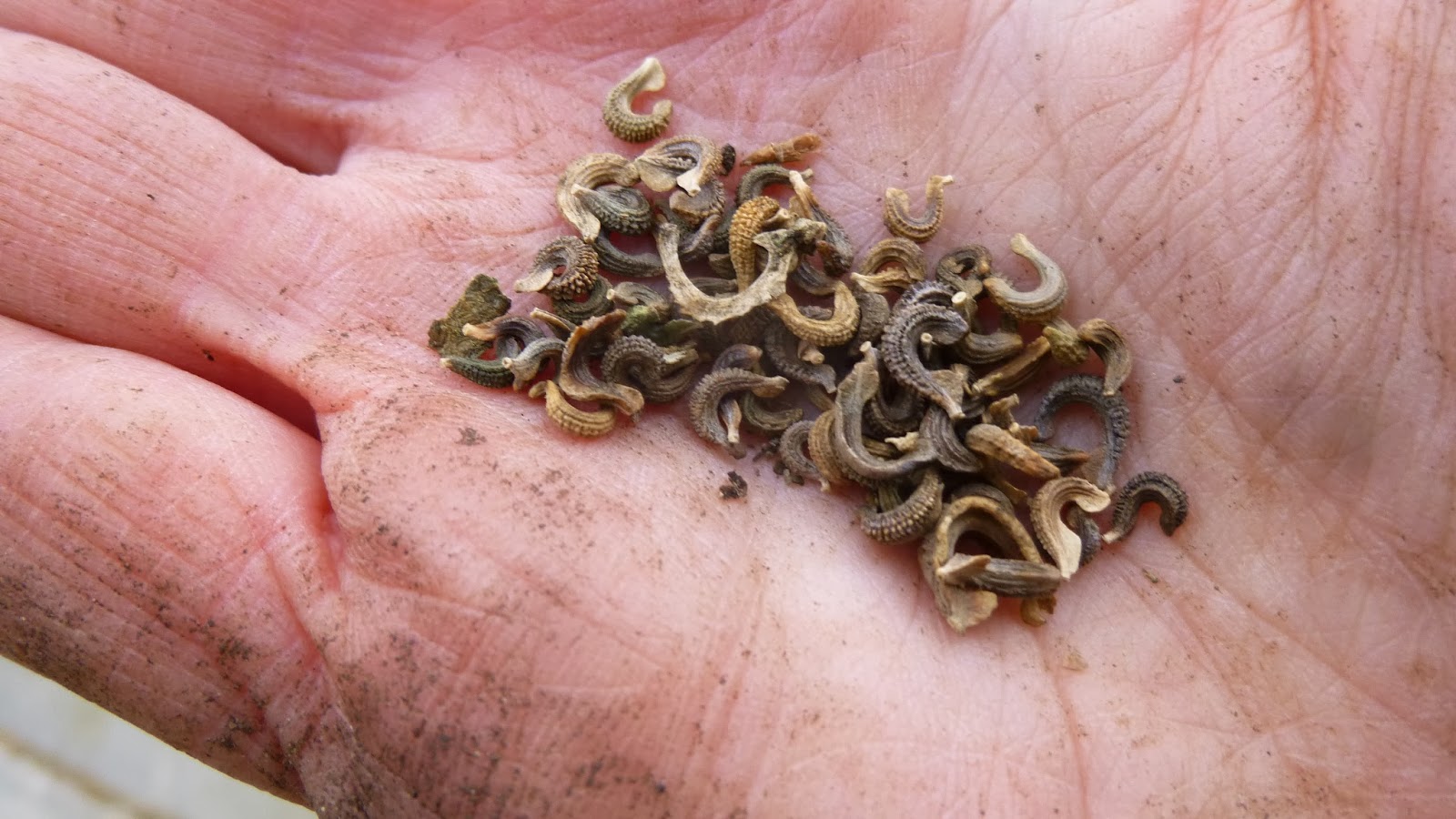
Its time to sow Calendulas for colour that lasts all summer long. Also known as Pot Marigolds, Calendulas are easy to grow and need very little looking after. If you sow the seeds now they'll be flowering by the end of May and will keep on going right through till the frosts next winter! They are hardy annuals (meaning that they'll grow quite happily outside in a cold spring, and that they will grow from seed, flower and then die all in this current year). They will self-seed gently, so you should get brand new plants coming up next year without having to do anything. That's super-easy gardening for you! They're extremely good value for money. I bought this packet for £1.85 and have sown one long row in the veg patch and two seed trays and, as the germination rate is quite high, I am expecting a decent amount of plants for very little effort.


Lots of seeds for £1.85
The seeds are a little strange - flat but curved
You can sow the seeds straight into the soil where you want them to grow, or start them off in a seed tray and plant them out into the garden when they're a bit bigger. 

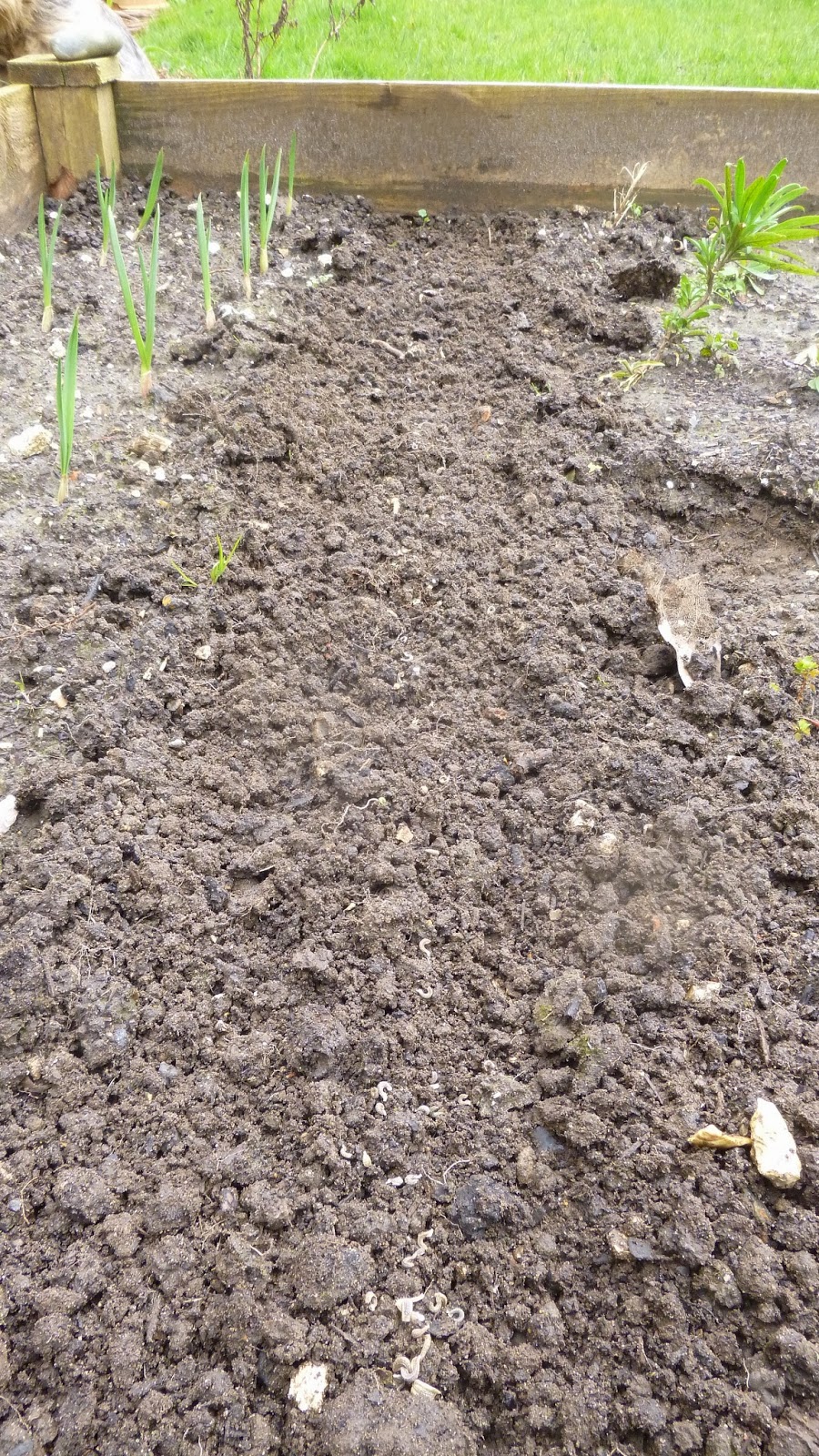
For sowing straight into the garden: fork over the area, removing any weeds and breaking up any big lumps of soil.  Make a shallow channel with your finger or a stick to a depth of about 1cm deep.  Sprinkle the seeds along the row as evenly as possible. Gently push the soil back over the seeds so that they are just covered, pat down and water if the soil is dry. Label them so you don't think they are weeds and dig them up in a month's time!

The row of seeds in the veg patch
If the area of your garden where you want the Calendulas to flower is waterlogged, needs some major renovation, or you just can't decide where you want their final position to be, you can sow the seeds in seed trays and then plant them out into the garden in a few weeks' time:  Fill a seed tray with multi-purpose compost and pat down gently so the surface is level. Place the seeds quite sparingly on top of the compost - you don't want them to grow too close together or they'll be competing with each other for light and nutrients. Then cover them with a fine sprinkling of compost, label them and water gently.  Put the seed tray somewhere sheltered where you won't forget to water it - mine are up against the patio doors for a bit of extra warmth and protection from the weather. When the seedlings are up and looking sturdy and leafy they can be potted on into bigger pots to keep them growing steadily.  I'll share this process with you in a future post. 

The seeds in a seed tray

25 February 2014

The Niyamas of Yoga - 5 Ways To Get To Know Yourself Better

Back in the 2nd century BCE, a Hindu sage called Patanjali wrote The Yoga Sutras, a guidebook for attaining freedom and contentment.

The practice of yoga consists of 8 parts, or limbs. The first limb is the Yamas, or moral guidelines, which I overviewed in last week's blogpost. This week, the second limb of the eight-fold path of yoga, the Niyamas, is under the spotlight:

Whereas the Yamas concern your relationship with the world, the Niyamas are personal observances which point the way to a happy and healthy life.

The 5 Niyamas are:

Saucha - Purity: Practice purity by observing how you treat your body and your mind. Some of the ways to keep the body pure are by eating clean and healthy foods, taking care of personal hygiene and using asana practice (the postures) to cleanse by stimulating the blood, lymph, digestive and respiratory systems. The mind can be kept clean by meditation, letting go of grudges and perceived difficulties and also by practicing mindfulness in everyday living.

Santosha - Contentment: The yogic path teaches acceptance and gratitude for what you already have. Yoga practice is a constant reminder to be in the present moment, not wishing that things were as they used to be or comparing ourselves to others and wishing we were like them. Practice Santosha by regularly reminding yourself of all the many blessings you already have in your life - your family and friends, the spring flowers and the buds on the trees, your home, the warm clothes that you have to wrap up in on a cold day.

Tapas - Self-discipline: This Niyama is about sticking to your goals and being authentic. It's about having enough inner fire to stay focussed and committed to your intentions. Practice Tapas when you notice those excuses coming up about why you can't do your yoga practice today!

Svadhyaya - Self-study: "Yoga is the perfect opportunity to be curious about who you are" Jason Crandell
When you pay attention to how the body feels during your yoga practice, you start to notice habits and conditioning. You become aware of how you react to every pose, where you feel limited, stressed, peaceful, annoyed or relaxed, for example. You are getting to know yourself. When this starts to happen "on the mat" you can shift your awareness to your reactions to situations that occur off the mat.  You'll be getting to know yourself a little better - it's useful information which will help you become more comfortable with who you are.

Ishvara Pranidhana - Surrender: The last Niyama is about trusting life and letting go of limited beliefs. It's about opening to possibilities, living more spiritually, having a sense that the Universe is taking care of things so you don't need to try to control everything. You can practice Ishvara Pranidhana in daily life by doing the best you can do and letting go of the need for the results to turn out a certain way.

If you are interested in the Yamas and Niyamas, the first and second limbs of yoga, take a look at this website http://www.theyamasandniyamas.com/resources.html which has a short video about each one.

Next week I will be writing about at the third limb, Asana - the physical practice of yoga.

This week I am making... Warm Butternut Squash and Feta Salad


For this healthy, nourishing lunch you will need:

1 butternut squash
Quarter of a pack of feta cheese
Rocket or other salad leaves
1 tablespoon of pine nuts
Balsamic vinegar
Olive oil
Black pepper

Preheat the oven to 180degrees/gas mark 4. Peel the butternut squash and cut into chunks. Place the pieces in a roasting tin, add a splash of olive oil and mix well until the pieces are covered in the oil. Place the tin in the oven for 20 minutes. Remove the tin from the oven and add a splash of balsamic vinegar, mix well and put back in the oven for another 10 minutes. The squash should now be soft and deliciously browned.  

Turn the oven out and put the pine nuts on a baking sheet into the oven for a couple of minutes. The remaining heat of the oven will be enough to brown the pine nuts. Put your salad leaves in a bowl, put the butternut squash pieces on top, crumble the feta cheese over the squash, add a twist of black pepper to taste and sprinkle with the pine nuts. Yum! And there's enough left over to have for lunch tomorrow too!

This week I am visiting...Somerset

In my quest to visit new places and have new experiences I booked a family weekend away and ended up visiting three places I've already been to before! We stayed in a lovely, newly renovated cottage in the village of Wookey Hole which is famous for it's cave system and slightly tacky amusement park. Arriving in Wookey Hole on Friday lunchtime we had a good veggie lunch in the local pub and then chilled out in our cottage for the rest of the afternoon. On Saturday we went for a walk up Ebbor Gorge under blue skies and glorious sunshine. This steep ravine is cut deep into the limestone cliffs of the Mendip Hills. The walk is moderately challenging (Small Brown Dog needed a bit of a push up some parts of the craggy, rocky path), and offers wonderful views of the Somerset Levels from the top of the cliff edge.  


Ebbor Gorge
In the afternoon we visited Wells. This historic city is famous for being the smallest city in England.  It qualifies for this title because, although it only has about 12,000 inhabitants, it has a cathedral.  And it is some cathedral!  


Holiday Headstand
On Sunday we visited Glastonbury.  This town, most famous for its music festival, is also well-known for its myths and legends, notably King Arthur, the Holy Grail and the Holy Thorn. It has a quirky High Street with independent shops that have a New Age feel. By lunchtime the weather had deteriorated and as we climbed the Tor we were almost blown away. The views were not so good because of the weather but it did show us the extent of the recent flooding. 


Glastonbury Tor


Digby looking a little windswept!

We enjoyed afternoon tea with delicious vegan, gluten free cakes in one of the many cafes and I had a lovely time browsing in some of the shops, buying incense burners and hanging bells until I was dragged away by the rest of the family.

I'm already planning our next weekend getaway. These short breaks are a breath of fresh air (literally this time!) - I get to spend time with my family and give them my full attention without everyday chores getting in the way. They offer me a chance to explore our wonderful country and an opportunity to look at things with a fresh perspective.

This week I am growing... Rocket

I eat a lot of salad which I love, but most of it comes in a bag, which I don't love. In the summer I grow mixed salad leaves in the garden, but Rocket grows better in the cooler months as it has a tendency to go to seed quickly when the weather is hot.  So for the next two or three months I'm going to sow a tray of Rocket every couple of weeks so that I have a continuous supply.  A packet of seeds costs less than £2 and should last two or three sowings.

It's really easy to do:

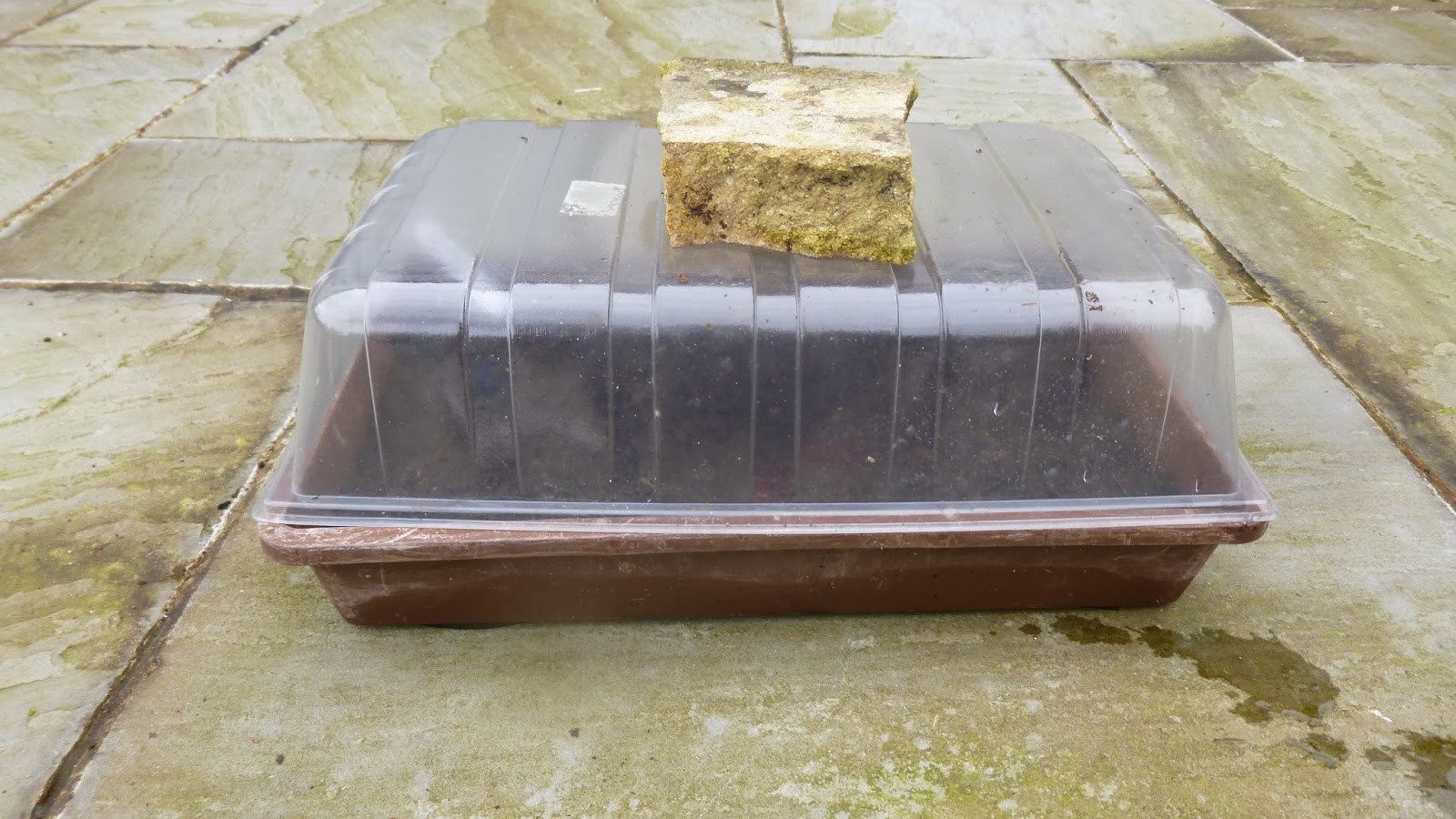
Fill a seed tray with multipurpose compost and pat gently down. Sprinkle on about a teaspoon of seed as evenly as you can, then cover with a fine layer of compost. Water, cover with a perspex lid and put in a sheltered spot (I've put mine up against the patio doors where I won't forget to water it) or put in a greenhouse.  Keep the compost moist. The seedlings will come up quickly, and Rocket is best harvested when the leaves are really young by cutting the leaves off with scissors.  


Fill a seed tray with compost
A teaspoon of seeds should give a good crop
Secure the lid with a heavy stone!

19 February 2014

The Yamas of Yoga

Thousands of years ago a sage called Patanjali wrote down a set of guidelines for living a life of freedom and balance.  This great work was called the Yoga Sutras and to this day it remains one of the most important texts about yoga.

Patanjali described yoga as a practice of 8 parts, or limbs.  Here is a brief overview of the first limb of yoga - the Yamas:

The Yamas are 5 moral disciplines which give ethical guidelines for living life mindfully.  

1. Ahimsa: non-violence, non-harming
This yama is a reminder to have respect and compassion for all living things, including yourself. 

2. Satya: truthfulness
Using words carefully so they do not harm others. Being honest and not exaggerating or bending the truth.

3. Asteya: non-stealing
Stealing comes from feeling that there is not enough, and that something in life is missing. Practice Asteya by acknowledging the abundance that is already present in your life, and by recognising the little ways in which you steal from yourself and others (i.e. not getting enough sleep, being late for appointments, taking more than is actually needed).

4. Brahmacharya: self-restraint and moderation in all things  
Using your energy wisely, channelling it in the direction you want it to go, not wasting it in ways which will not add value to your life.

5. Aparigraha: non-possessiveness, non-hoarding  
This is different from Asteya, as it refers to jealously guarding what we have and what we want. Practice Aparigraha by being generous with what you have, letting go of what you don't need and not being resistant to change.

If you are interested in learning more about the Yamas and their guidelines for living a life of peace and accord with yourself and those around you, I recommend  this website which offers a serious of short videos explaining each Yama in more detail. 


This week I am visiting... Sarah Raven's gardening website www.sarahraven.com  

Sarah Raven is a gardener, writer and TV presenter who runs a gardening and cookery school in Sussex.  She is an advocate of growing flowers to cut and bring into the house and has written a number of books on this subject - Grow Your Own Cut Flowers being one of my favourites.  


Sarah has a mail order business selling seeds, seedlings, gardening and kitchen equipment. The website (and the catalogue) is visually appealing with beautiful photographs by renowned garden photographer Jonathan Buckley.  The site is easy to negotiate and full of useful information about growing seeds.  Especially useful is the "seeds to sow now" section which tells you what to grow month by month.  I am like a kid in a sweetshop when I order from this website and I tend to get a bit carried away! This year I intend to choose carefully and not over-order!  


Sarahraven.com is currently offering 15% off seed purchases up until Sunday 23rd February. Quote SOW14 to claim your discount.

This week I am making... Baked Peaches

This is such a simple dessert and soooo delicious.

You will need:

4 ripe peaches or nectarines
100g amaretti biscuits crumbled finely
2 tablespoons brown sugar
20g butter
raspberries to serve
ice cream or greek yoghurt to serve


Ingredients

Here's how to make them:
1. Pre-heat the oven to gas mark 6/200degrees c
2. Cut the peaches in half, de-stone, and place cut side upwards in a buttered oven-proof dish
3. Sprinkle the peaches with the brown sugar
4. Spoon the crumbled Amaretti biscuits over the peaches
5. Cut the butter into tiny pieces and dot on top
6. Bake in the oven for 20 minutes
7. Serve with raspberries and ice-cream or greek yoghurt


This week I am growing...Lillies

Another quick and easy job that will reward you a hundred times over this summer with long-lasting, scented flowers. 

Lillies are bulbs which can be planted any time between autumn and early spring - so I'm not late planting these! Hooray!

Choose your bulbs at the garden centre (or www.sarahraven.com where they are cheaper). They should be large and plump. They cost about £1.99 per bulb and you need at least 3 to plant together to form a decent clump. They are good value because they need little aftercare and will flower year after year.  I chose Lilium Regale, a large white lily known for its delicious scent. 

You can plant the bulbs directly into the ground if you have well-drained soil, but I like to plant them in pots which I can move around the garden to fill any gaps in the border.  Half fill a good sized pot with a mixture of grit and multi-purpose compost (lillies don't like to sit in wet soil so the grit helps with the drainage).  Place the bulbs on the compost pointy end up and then cover them with more grit/compost mix to fill up the pot. Label them and then wait for summer! At the end of the summer you can move the pot to a sheltered position for the winter and give them a feed of general purpose fertilizer.
Plant in groups of 3
Plant pointy end up
One word of warning:  lillies are the favourite food of lily beetles. You will need to inspect your lillies regularly once they are in leaf, and if you see the bright red beetles they should be picked off and disposed of. This is a challenge for a yogi practicing Ahimsa (see above). I have been known to collect buckets of snails and take them to the woods rather than kill them, but I'm not sure how to repatriate a lily beetle!

11 February 2014

So What Does All This Lifestyle Stuff Have To Do With Yoga?

The postures (Asanas) that we do in our classes are just one part of our yoga practice - an eighth to be exact. The other seven parts (or limbs, as they are known) are: 

Yama (guidelines for moral and ethical behaviour), 
Niyama (personal observances for health and wellbeing), 
Pranayama (breathing techniques), 
Pratyahara (withdrawing the senses away from external stimuli), 
Dharana (developing concentration), 
Dhyana (meditation) and 
Samadhi (enlightenment). 

A yoga class might touch on some of these aspects but here in the Western world there is more emphasis placed on the physical postures than any of the other limbs.  

These recommendations for living life well can seem complicated at first, but it is a well laid-out, tried and tested path which, if we choose to follow it, will bring freedom, joy and contentment. Over the coming weeks I will explain each one of the 8 limbs in a little more detail.

The ancient yogis also taught us about Bhava - an inner feeling, mood, or attitude to life and Rasa - the essence or juice in our lives. An imbalance of these two states can leave us feeling flat, unmotivated and stuck. Our yoga practice helps us cultivate Bhava and Rasa by teaching us to become more aware of what's going on in the body, clearing away sluggishness and focusing the mind.  By mindfully choosing what we eat, how we move, what we read etc, we can activate our Bhava, and we can juice up our lives by learning new things, visiting new places and spending time with people who uplift us.

So, in answer to the question above, the "lifestyle stuff" within this blog is interconnected with yoga - the more you practice yoga, the more awareness you will have about the way your life is flowing, and then you can take the steps you need to take to have a satisfying and fulfilling life.

This week I am making... a mess! And then tidying it up again!

Inspired by www.flylady.net, a US website dedicated to helping you get all your household chores organised, I decided to adopt their Monthly Habit http://www.flylady.net/d/habits-of-the-month/february/ for February to declutter for 15 minutes a day. My cooking/baking cupboard has been a complete jumble for some time now, stuffed to overflowing with folded-over packets of seeds, flour and dried fruit. As you can see, it had started to spill out onto the worktop below.


before...

So, I set the timer for 15 minutes and got to work. Out came all the packets of flour and sugar to be kept or discarded (the oldest packet of flour had a best before date of October 2011!). The half-used packets of seeds were sorted and decanted into plastic tubs and the shelves were wiped clean. There was a moment when the cupboard was empty and it's entire contents were scattered all over the worktops and it all looked worse than before I had started but, bit by bit, everything was put back on it's shelf. It all looks so much better now - there's lots of space and I can see what I need at a glance. It took me about 20 minutes but it was a good investment of my time. To clear out the whole kitchen would be an overwhelming task but doing it this way is much more manageable and surprisingly rewarding!


...and after

This week I am visiting... The Lightbox in Woking, Surrey


This fabulous, modern building is a work of art in itself, but inside it has 3 galleries which host a range of different art exhibitions. Currently on view is Animals in Art - a collection of modern British works, an exhibition of Renoir works, a collection of works by students at the University of Creative Arts Farnham and a permanent display about the history of Woking. The Lightbox also hosts regular workshops for adults and children alike. There is a bright cafe for snacks and hot drinks, a gift shop, parking next door at the newly-built Brewery Road car park and entrance to the galleries is free.


The Lightbox isn't huge, but it is a very interesting place to visit and, when combined with a visit to the brand new World Wildlife Fund Living Planet Centre http://www.wwf.org.uk/what_we_do/the_living_planet_centre/ next door, makes for a very enjoyable afternoon out.


WWF Living Planet Centre

This week I am growing... Sweet Peas

Sweet Peas are one of the best value summer flowers you can grow. They are cheap and easy to grow from seed and are tough and hardy so don't need mollycoddling. They have a long flowering season - if you keep picking them they'll flower continuously all summer - and they flower prolifically so you will always have beautiful scented flowers for your house.

This packet of seeds cost £2.05 and there were 30 seeds in the packet. This will be enough to smother a wigwam of beanpoles for a glorious display later in the year.


You can sow the seeds in autumn or do it now - it couldn't be simpler:

1. Sweet peas like to send their roots down deep so a little shallow flower pot won't do. Fill a 5inch/12cm pot with multi-purpose compost.

2. Place 5 evenly spaced out seeds on top of the compost and push them down with your finger to a depth of about 1 centimetre. Gently smooth compost back over the hole you have made.


3. Water the compost well, label them (or you'll forget what they are!) and put the pots in a cold frame, greenhouse, cool conservatory or cool windowsill. They won't like being somewhere warm like your living room - the plants will just become weedy and leggy - so treat 'em mean.

4. The seedlings will appear within about 2 weeks - keep them moist.

5. When the seedlings have two pairs of leaves, pinch off the topmost pair with your fingernail. It sounds harsh but it will encourage the plant to put out more sideshoots and become bushier and stronger.

6. In March or April, depending on the weather conditions, you can plant the seedlings out into the garden. I like to make a wigwam of beanpoles and then plant a potful of seedlings at the base of each beanpole. Tying the stems to the beanpoles with garden twine as they grow helps to keep the plants growing upwards rather than flopping down. I'll show you how to do this when the time comes.

4 February 2014

Do More of What Makes You Happy in February

So how was your January? And the New Year's Resolutions? In our busy, hectic lives it can be so easy to give up on things you want to do due to the sheer overload of your daily tasks. Sometimes it feels as if spending time on yourself is a luxury and that there are so many other things that are more important.  

Last week I posted a picture quote on the Thrive Yoga Facebook page which, guessing by the number of 'likes' it got, really resonated with people. It was a reminder to "take time to do what makes your soul happy".  

Do you have something you really like to do? It doesn't need to be grand or be a fantastically exciting hobby. It could be as simple as sitting in a favourite spot reading a book, or going for a walk with your dog. Maybe you haven't quite found your "thing" yet. Keep exploring new avenues until you do. It may take you a while to find the thing that makes your soul sing but keep looking, and enjoy the journey. 

Each one of us is unique, so what makes you happy may be different from what makes someone else happy. For me, it's gardening - feeling connected to the earth, being creative and making my world a little bit more beautiful, and yoga - enjoying the feeling of each pose every time I do it, and quietening my busy mind.  

If you often feel that you shouldn't be spending time doing the things you love to do, think about it this way: when you take the time to do what makes the soul happy you feel more fulfilled, and when you are happy, those around you will pick up on it, and life will flow a little more smoothly for everyone.

So if your New Year's Resolutions have slipped a little, set a new intention now at the beginning of February to make time to do more of the things that make you happy.  

This week I am making... Roasted Vegetables

Here's a super-easy recipe for a very healthy meal of roasted vegetables. You can make a big batch of this and keep in the fridge for a few days to have with rice, salad, jacket potato or in a warm ciabatta sandwich. 

You will need:
3-4 tablespoons olive oil
1 onion
2 peppers (red, orange or yellow)
1 butternut squash
2 courgettes
1 aubergine
A few mushrooms
3-4 tablespoons of balsamic vinegar
half a teaspoon of dried mixed herbs
salt and pepper


Pre-heat the oven to 180 degrees, gas mark 4. Dice the onions. Chop the rest of the vegetables into large chunks. If the mushrooms are small then leave them whole and if they are big ones just cut them in half as they will shrink. Put all the vegetables into a roasting tin with the olive oil, herbs and seasoning and stir until all the vegetables are well coated. Put into the oven and roast for 20/25 minutes or until all the vegetables are almost cooked through. If there is a lot of liquid in the pan drain some out before adding the balsamic vinegar. Stir everything again and put back into the oven for another 10 minutes or so until the vegetables are tender. They taste good hot or cold.


This week I am visiting... Somerset House, London WC2R 1LA

Somerset House is one of London's major arts and cultural centres and always has an interesting calendar of events. On the north side of Waterloo bridge overlooking the River Thames, this grand building is used to host art exhibitions, film festivals, music and fashion events.

Some of the events are free (currently there is a Derek Jarman exhibition which is free to enter) and some of them charge an admission fee (I visited the Isabella Blow: Fashion Galore! exhibition which cost £12.50). Somerset House is also the home of the Courtauld Gallery which houses a fine collection of Impressionist and post-Impressionist paintings.


You can spend a few hours at Somerset House enjoying the beautiful surroundings both inside and outside the building. Free guided tours are available at various times during the day which offer an insight into the building's history and point out architectural and decorative features which you might miss if you are wandering round on your own. In better weather, you can sit out on the large terrace which offers stunning views over the river.  In the winter the central courtyard turns into an ice rink and in the summer the fabulous fountains which intermittently spout jets of water encourage children and adults alike to play. If you are hungry there are no less than 5 cafes to choose from, and it has an interesting bookshop which is worth a browse.

There is lots on offer at Somerset House - it's definitely worth a visit. Take a look at the website here www.somersethouse.org.uk. As an added bonus, you can stand on Waterloo Bridge and enjoy what is arguably the best view in London. Whichever way you look there's a reminder of the richness of our fascinating capital city.


The view from Waterloo Bridge looking west...

...and east

This week I am growing... Forget-Me-Nots

Not really growing, more like digging them up from all the places I don't want them and replanting them in the places I do want them!

Forget-Me-Nots are so lovely in the spring. They have evergreen foliage and bright blue flowers that go really well with tulips.


Forget-me-nots Myosotis sylvatica

You need to be sure that you really want them in your garden though, because they do self-seed themselves vigorously. However, I'd rather spend a little bit of time pulling them out of the garden than be without their plentiful and pretty flowers.

My Forget-Me-Nots have multiplied enormously and needed a good thin out. So, with my intention to do gardening little and often in 2014 firmly set, I gave myself a time limit of 20 minutes to do some tidying up.


before...

I dug up the thick, congested clumps and gently teased them apart. Often, what looks like one big clump is in fact many smaller plants all stuck together. They won't flourish as well if they are competing with their neighbours for light, air and water, so it is for the health of the plant as well as the aesthetics that this tidy up is necessary.


The healthiest, strongest looking plantlets, (i.e. good short bushy growth rather than spindly and leggy) got replanted back into the clear border (just dig a little hole, pop the plants in, and push the soil back around them firmly) or potted up into plastic flowerpots to be given away. The spindly, weedy clumps were thrown into the garden waste bin. I do hate throwing plants away but these are so prolific I don't mind being ruthless in this instance.

The result of this very pleasant 20 minutes of gardening (in the sun!) is a much tidier border with healthy Forget-Me-Nots and a great sense of satisfaction. In April and May this border will be a carpet of blue flowers peppered with bright yellow wallflowers - I can't wait!


...after
If you would like some Forget-Me-Nots to brighten up your own garden in spring I currently have plenty to give away - just let me know via the email address on the contact page.