52@50 marks my half-century of being alive on planet Earth. It's a reminder to myself and, hopefully, an inspiration to you to be curious about life. To get off the sofa and out into the world. To open new doors and live this one precious life to the fullest.
These new things I'm doing, they don't need to be momentous or daring, they just need to be an exploration - with an open mind. I'm intending my next 50 years to be a little more adventurous than the first 50, but at the same time have a peaceful and restful flow to them, balanced with the joy of just 'being'. I want more freedom from constraints (which are often self-imposed, sometimes culturally imposed) yet I want to give more back to the world. I want to be interested, to look at things more closely, and be full of wonder. I want more magic.
In recent years I have chosen a mantra to guide me through the next 12 months. I've used "be bold", "head up and heart open", and "keep it simple" (which worked so well for me I used it for 2 years). I've already chosen my mantra for 2017, it's "be curious" and as I share what I find during the coming months I hope to inspire you to get out there and find some magic too.

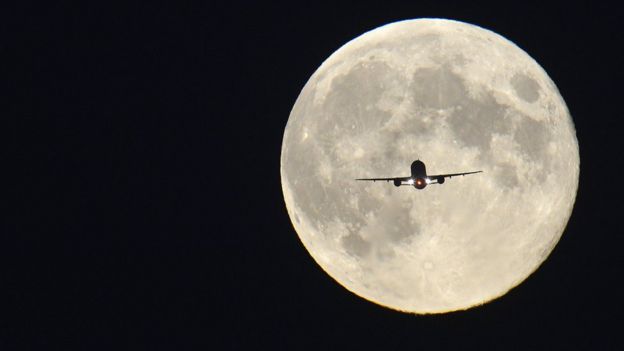
Finally, referring to my recent blog post and the happening of the Supermoon, I thought i'd share this photo with you, taken by a relative of my friend in Eilat, Israel on the Monday evening. It doesn't look real does it? But it is - no enhancement or photoshopping at all. Truly beautiful!

Namaste. Until next week....
These new things I'm doing, they don't need to be momentous or daring, they just need to be an exploration - with an open mind. I'm intending my next 50 years to be a little more adventurous than the first 50, but at the same time have a peaceful and restful flow to them, balanced with the joy of just 'being'. I want more freedom from constraints (which are often self-imposed, sometimes culturally imposed) yet I want to give more back to the world. I want to be interested, to look at things more closely, and be full of wonder. I want more magic.
In recent years I have chosen a mantra to guide me through the next 12 months. I've used "be bold", "head up and heart open", and "keep it simple" (which worked so well for me I used it for 2 years). I've already chosen my mantra for 2017, it's "be curious" and as I share what I find during the coming months I hope to inspire you to get out there and find some magic too.

52@50 no 16: The Spanish Riding School on Tour
I've always loved horses. As a small girl I constantly harrassed my parents to let me learn to ride, and I read all the pony books I could get my hands on. My bookshelves were crammed. In particular, I remember the paperback novels by the Pullein-Thompson sisters, Josephine, Christine and Diana. Between them they wrote over 150 books for pony-mad girls (Show Jumping Secret, Riding With the Lyntons, I Rode a Winner and Janet Must Ride were my favourites). At age 10 I was allowed to start riding lessons and shortly afterwards I started helping at the stables on a Saturday. At 15 my greatest wish of having a pony of my own came true. Except I chose a clompy carthorse rather than a gymkhana pony. On his way to Southall Market where he certainly would have ended up on the meat lorry, Questor became my true love for 20 years. He was a Clydesdale that was a little too small at 16hands to make the grade, but I thought he was perfect. Here we are all dressed up for a show nearly 30 years ago!! :

I had another horse for a while too - an unwanted grey pony who was lots of fun to ride, but when he died and my beloved Questor had to be put down about 15 years ago, I didn't get another one. I had small children by then and they were the focus of my life so I decided to step away from the rather all-consuming equine world. To this day, although I still love horses and have been on the occasional hack at a local riding centre, I haven't stepped back in. Maybe one day I will....
I recently had the opportunity to go to Wembley Arena to see the famous Spanish Riding School of Vienna perform with their beautiful white Lippizaner horses. Of Spanish descent (hence the slightly misleading name) the horses are born brown and gradually turn white. Only stallions are chosen to perform and those that are considered the best undergo years of training in classical dressage until they can perfectly execute the difficult movements that are required in the performances. The Riding School, which is situated in Vienna, is a tourist attraction in it's own right, but no visit would be complete without seeing the horses, both in their stables and in the arena.
The Spanish Riding School goes on tour around the world and a ticket to a performance is highly prized and not cheap! The horses are beautifully presented with sparkling saddles, and the riders wear immaculate uniforms. They perform set routines to music which include ridden sequences, long reining (where the rider walks behind the horse, guiding him with long reins) and the famous 'Airs Above the Ground' where the horses rear and leap. The Capriole is a vertical leap with a kick-back of the hind legs. These movements were historically part of the training of military horses, to keep them fit and athletic enough to perform in battle.
As I watched these beautiful horses circling and crossing the arena perfectly in time with each other, but controlled with whips and spurs, I unexpectedly experienced a sense of discomfort. I felt sorry for them, leading their organised, contained and artificial lives, dominated by mankind in every way. I'm glad I can say that I have seen them but I think this 52@50 is going to be a once in a lifetime experience for me.

This Week's Recipe...Cauliflower and Almond Soup
Here's another recipe from Florence House, the retreat centre in Sussex where I host my yoga weekends. Cauliflower is full of vitamins, minerals and anti-oxidants (if you're interested to find out more about its nutritional values click here) but it can be a little uninspiring and there don't seem to be too many interesting recipes around to make it a bit more exciting. This recipe is easy and has the added health benefit of the almonds (click here to look at all their many nutritional benefits). It makes simple, healthy lunch and the only drawback is that cooked cauliflower leaves a lingering smell and I needed to leave the windows open for a while to air the house afterwards! But don't let that put you off - every house needs a good air-change every now and then, especially in the winter when we don't have the doors and windows open so much, so you'll get an extra benefit here too.
You will need:
1 small onion
2 sticks of celery
small amount of olive oil
1 small cauliflower
110g ground almonds
600ml vegetable stock (use Marigold vegetable bouillon for the best flavour)
Ground white pepper
(Serves 2)

And here's how to make it:

4 More Ayurvedic Tips to Help You Stay Well This Winter
Turmeric Milk is the healthy hot drink of the moment. Turmeric is a spice which has been used for flavouring food and for its healing properties for centuries in India and its benefits are now being scientifically recognised to help with many illnesses and diseases. Click here to look at its impressive list of beneficial properties.
Turmeric Milk, also known as Golden Milk, is an easy way to take the spice without having to eat lots of curries. Especially useful in winter to both prevent and alleviate coughs and colds due to its anti-viral and anti-bacterial qualities, turmeric milk actually tastes nice too and makes a great alternative to a caffeine drink. Here's the link to an article entitled '12 Reasons You Should Start Drinking Turmeric Milk' so you can have a look at why it's hit the health headlines recently.
This recipe was given to me recently by one of my yoga students (thanks Sandra - I love it):
Ingredients:
2 cups of homemade almond milk
1 tablespoon local honey, optional
1 tablespoon coconut oil, optional
1 teaspoon ground turmeric
1 cinnamon stick or 1 teaspoon ground cinnamon
small pinch of black pepper and grated ginger (fresh is best)
(serves 2)
Instructions:
It's been pointed out to me by one of my yoga students (thanks for the tip-off Hazel) that there's a word of warning about drinking lemon water first thing in the morning too (see last week's post). Because lemon contains high amounts of citric acid it can be detrimental to the enamel of your teeth. Apparently, dentists recommend that you don't brush your teeth immediately after drinking lemon water as this can wear away the enamel as the citric acid is still fresh on your teeth. Before you brush, make sure to rinse your mouth with water, or you can also use a straw so that the water doesn't touch your teeth. You could also try using lemon essential oil instead of the fresh fruit. Apparently, as it's made from the peel rather than the flesh it's better for your teeth - use 1-2 drops per glass of water.
Practise Viparita Karani (Legs Up the Wall Pose) This relaxing pose has many benefits. If you've been standing all day at work and have achy legs it will reduce swollen, puffy ankles and feet. The heart doesn't have to work so hard pumping blood into the legs, and lactic acid is flushed from the legs so it's a good one to practice after a workout or a run. It helps to balance the endocrine system and the nervous system as less adrenaline and cortisol (the 'stress hormones') are sent around the body so it can relax into 'rest and digest' mode. It is safe for everyone, including beginners to practise. Cautions are given though to pregnant women and those with eye problems and heart problems - but, as long as the pelvis is not lifted higher than the heart, it is fine for those who are menstruating to practise this pose (usually inversions are avoided during the first part of a period).
Viparita karani is my 'go to' pose at the end of the day when I want to settle and quieten both body and mind before bed and, hopefully, ensure a good night's sleep and, if I get a chance to do it during the day, it leaves me feeling refreshed as if I've taken a powernap, and content that I have taken the time to give myself a little tlc.
Here's how to do it:

Use coconut oil to keep your skin soft I mentioned the Ayurvedic practice of Abbhyanga in the blog last week. It is self-massage, using simple, pure oils to keep the skin supple and smooth. It is a beneficial reminder too to care for this one amazing body you have been given. Ayurveda teaches us to treat the body kindly and to take the time to keep it in the best condition possible.
This tip, based on the practice of Abbhyanga, will moisturise your feet which can often become dry and cracked in winter. We tend to forget about our feet and keep them constantly wrapped in socks and boots and they need a little tlc too. Before you go to bed rub a tiny amount of coconut oil (which is solid at room temperature) into your feet. Do this over a towel to avoid getting oil on the carpet and put an old pair of socks on straight afterwards - the warmth will help the oil to soak in and will stop the oil getting on your sheets. It is a quick and easy habit to get into and it really works - your feet will feel smooth and cracked heels will quickly become a thing of the past.
To alleviate chapped hands, rub in a little coconut oil before you do the washing up, then put your rubber gloves on and when you've finished your hands will feel really smooth and silky. Best to keep a special pair of Marigolds for this job as they do get oily inside.


Ginger Steam Inhaler If you do have the misfortune to succumb to a cold, you could try this simple steam treatment to help relieve congestion: Boil a pint of water in a large pan. Add one teaspoon of ground ginger. Remove from the heat with care. With your head over the pan, inhale the steam. Use a towel over your head to keep the steam from dissipating too quickly. Stay for about 5 minutes to help clear blocked sinuses and a stuffy nose.

This Week's Musical Offering... is Floating Sweetness by DJ Drez. I love this track. It has a gentle yet definite rhythm and a lovely melody. You could use it in a playlist for slow Sun Salutations or a relaxing seated/supine sequence or you could, right now, relax your face, shoulders, arms and hands, legs and feet. Take long, slow deep breaths and allow yourself to just sit in a quiet meditation enjoying this lovely music...
I've always loved horses. As a small girl I constantly harrassed my parents to let me learn to ride, and I read all the pony books I could get my hands on. My bookshelves were crammed. In particular, I remember the paperback novels by the Pullein-Thompson sisters, Josephine, Christine and Diana. Between them they wrote over 150 books for pony-mad girls (Show Jumping Secret, Riding With the Lyntons, I Rode a Winner and Janet Must Ride were my favourites). At age 10 I was allowed to start riding lessons and shortly afterwards I started helping at the stables on a Saturday. At 15 my greatest wish of having a pony of my own came true. Except I chose a clompy carthorse rather than a gymkhana pony. On his way to Southall Market where he certainly would have ended up on the meat lorry, Questor became my true love for 20 years. He was a Clydesdale that was a little too small at 16hands to make the grade, but I thought he was perfect. Here we are all dressed up for a show nearly 30 years ago!! :

I had another horse for a while too - an unwanted grey pony who was lots of fun to ride, but when he died and my beloved Questor had to be put down about 15 years ago, I didn't get another one. I had small children by then and they were the focus of my life so I decided to step away from the rather all-consuming equine world. To this day, although I still love horses and have been on the occasional hack at a local riding centre, I haven't stepped back in. Maybe one day I will....
I recently had the opportunity to go to Wembley Arena to see the famous Spanish Riding School of Vienna perform with their beautiful white Lippizaner horses. Of Spanish descent (hence the slightly misleading name) the horses are born brown and gradually turn white. Only stallions are chosen to perform and those that are considered the best undergo years of training in classical dressage until they can perfectly execute the difficult movements that are required in the performances. The Riding School, which is situated in Vienna, is a tourist attraction in it's own right, but no visit would be complete without seeing the horses, both in their stables and in the arena.
The Spanish Riding School goes on tour around the world and a ticket to a performance is highly prized and not cheap! The horses are beautifully presented with sparkling saddles, and the riders wear immaculate uniforms. They perform set routines to music which include ridden sequences, long reining (where the rider walks behind the horse, guiding him with long reins) and the famous 'Airs Above the Ground' where the horses rear and leap. The Capriole is a vertical leap with a kick-back of the hind legs. These movements were historically part of the training of military horses, to keep them fit and athletic enough to perform in battle.
As I watched these beautiful horses circling and crossing the arena perfectly in time with each other, but controlled with whips and spurs, I unexpectedly experienced a sense of discomfort. I felt sorry for them, leading their organised, contained and artificial lives, dominated by mankind in every way. I'm glad I can say that I have seen them but I think this 52@50 is going to be a once in a lifetime experience for me.

This Week's Recipe...Cauliflower and Almond Soup
Here's another recipe from Florence House, the retreat centre in Sussex where I host my yoga weekends. Cauliflower is full of vitamins, minerals and anti-oxidants (if you're interested to find out more about its nutritional values click here) but it can be a little uninspiring and there don't seem to be too many interesting recipes around to make it a bit more exciting. This recipe is easy and has the added health benefit of the almonds (click here to look at all their many nutritional benefits). It makes simple, healthy lunch and the only drawback is that cooked cauliflower leaves a lingering smell and I needed to leave the windows open for a while to air the house afterwards! But don't let that put you off - every house needs a good air-change every now and then, especially in the winter when we don't have the doors and windows open so much, so you'll get an extra benefit here too.
You will need:
1 small onion
2 sticks of celery
small amount of olive oil
1 small cauliflower
110g ground almonds
600ml vegetable stock (use Marigold vegetable bouillon for the best flavour)
Ground white pepper
(Serves 2)

And here's how to make it:
- Sweat the roughly chopped onion and celery in a little oil until soft.
- Add the chopped cauliflower, almonds, vegetable bouillon and a pinch of white pepper to taste and simmer until soft.
- Blend with a hand blender or in a food processor until it has reached the desired consistency - add more stock liquid if necessary.
- Season as required and add some seeds for topping.

4 More Ayurvedic Tips to Help You Stay Well This Winter
Turmeric Milk is the healthy hot drink of the moment. Turmeric is a spice which has been used for flavouring food and for its healing properties for centuries in India and its benefits are now being scientifically recognised to help with many illnesses and diseases. Click here to look at its impressive list of beneficial properties.
Turmeric Milk, also known as Golden Milk, is an easy way to take the spice without having to eat lots of curries. Especially useful in winter to both prevent and alleviate coughs and colds due to its anti-viral and anti-bacterial qualities, turmeric milk actually tastes nice too and makes a great alternative to a caffeine drink. Here's the link to an article entitled '12 Reasons You Should Start Drinking Turmeric Milk' so you can have a look at why it's hit the health headlines recently.
This recipe was given to me recently by one of my yoga students (thanks Sandra - I love it):
Ingredients:
2 cups of homemade almond milk
1 tablespoon local honey, optional
1 tablespoon coconut oil, optional
1 teaspoon ground turmeric
1 cinnamon stick or 1 teaspoon ground cinnamon
small pinch of black pepper and grated ginger (fresh is best)
(serves 2)
Instructions:
- Simply pour all ingredients into a small saucepan and bring to a light boil. Whisk to combine ingredients. Reduce heat to low and simmer for up to 10 minutes.
- Strain the milk if you have large pieces of ginger, cinnamon, peppercorns, etc. To serve, add honey or a dash of cinnamon.
- Enjoy warm.
It's been pointed out to me by one of my yoga students (thanks for the tip-off Hazel) that there's a word of warning about drinking lemon water first thing in the morning too (see last week's post). Because lemon contains high amounts of citric acid it can be detrimental to the enamel of your teeth. Apparently, dentists recommend that you don't brush your teeth immediately after drinking lemon water as this can wear away the enamel as the citric acid is still fresh on your teeth. Before you brush, make sure to rinse your mouth with water, or you can also use a straw so that the water doesn't touch your teeth. You could also try using lemon essential oil instead of the fresh fruit. Apparently, as it's made from the peel rather than the flesh it's better for your teeth - use 1-2 drops per glass of water.
Practise Viparita Karani (Legs Up the Wall Pose) This relaxing pose has many benefits. If you've been standing all day at work and have achy legs it will reduce swollen, puffy ankles and feet. The heart doesn't have to work so hard pumping blood into the legs, and lactic acid is flushed from the legs so it's a good one to practice after a workout or a run. It helps to balance the endocrine system and the nervous system as less adrenaline and cortisol (the 'stress hormones') are sent around the body so it can relax into 'rest and digest' mode. It is safe for everyone, including beginners to practise. Cautions are given though to pregnant women and those with eye problems and heart problems - but, as long as the pelvis is not lifted higher than the heart, it is fine for those who are menstruating to practise this pose (usually inversions are avoided during the first part of a period).
Viparita karani is my 'go to' pose at the end of the day when I want to settle and quieten both body and mind before bed and, hopefully, ensure a good night's sleep and, if I get a chance to do it during the day, it leaves me feeling refreshed as if I've taken a powernap, and content that I have taken the time to give myself a little tlc.
Here's how to do it:
- Choose a quiet spot with clear floor and wall space.
- Use a yoga mat or a blanket to lie on if you are doing this pose on a hard floor but you should be comfy enough on a carpeted floor.
- Sit down close to the wall facing sideways, then swing your legs gently up the wall as you lower yourself onto your forearms and then down on to your back.
- If your hamstrings are tight you might need to have a little space between your bottom and the wall so your legs are slightly angled, but for those with looser hamstrings, lie with your bottom right up against the wall.
- Stretch the legs up the wall and reach up into the heels. You can use a yoga belt or the tie from a bathrobe to tie your legs together so they can passively relax if you like.
- You can rest your forearms and hands on your belly, have your arms stretched out to the side or stretch them overhead - whatever feels most comfortable.
- Check that you are symmetrical.
- Relax the whole body - legs, torso, arms, face, eyes - and rest for up to 10 minutes breathing smoothly.
- To come out of the pose, inch yourself away from the wall enough to bend your knees and roll to the side. Pause for a moment lying on your side before coming up to sitting. Pause again to savour the peaceful feeling.

Use coconut oil to keep your skin soft I mentioned the Ayurvedic practice of Abbhyanga in the blog last week. It is self-massage, using simple, pure oils to keep the skin supple and smooth. It is a beneficial reminder too to care for this one amazing body you have been given. Ayurveda teaches us to treat the body kindly and to take the time to keep it in the best condition possible.
This tip, based on the practice of Abbhyanga, will moisturise your feet which can often become dry and cracked in winter. We tend to forget about our feet and keep them constantly wrapped in socks and boots and they need a little tlc too. Before you go to bed rub a tiny amount of coconut oil (which is solid at room temperature) into your feet. Do this over a towel to avoid getting oil on the carpet and put an old pair of socks on straight afterwards - the warmth will help the oil to soak in and will stop the oil getting on your sheets. It is a quick and easy habit to get into and it really works - your feet will feel smooth and cracked heels will quickly become a thing of the past.
To alleviate chapped hands, rub in a little coconut oil before you do the washing up, then put your rubber gloves on and when you've finished your hands will feel really smooth and silky. Best to keep a special pair of Marigolds for this job as they do get oily inside.


Ginger Steam Inhaler If you do have the misfortune to succumb to a cold, you could try this simple steam treatment to help relieve congestion: Boil a pint of water in a large pan. Add one teaspoon of ground ginger. Remove from the heat with care. With your head over the pan, inhale the steam. Use a towel over your head to keep the steam from dissipating too quickly. Stay for about 5 minutes to help clear blocked sinuses and a stuffy nose.

This Week's Musical Offering... is Floating Sweetness by DJ Drez. I love this track. It has a gentle yet definite rhythm and a lovely melody. You could use it in a playlist for slow Sun Salutations or a relaxing seated/supine sequence or you could, right now, relax your face, shoulders, arms and hands, legs and feet. Take long, slow deep breaths and allow yourself to just sit in a quiet meditation enjoying this lovely music...
Finally, referring to my recent blog post and the happening of the Supermoon, I thought i'd share this photo with you, taken by a relative of my friend in Eilat, Israel on the Monday evening. It doesn't look real does it? But it is - no enhancement or photoshopping at all. Truly beautiful!

Namaste. Until next week....