28 May 2016

Wildflower Walks and Avoiding Adversity

'52@50' no. 3 - Learning About Wildflowers

Continuing my new series of doing 52 new things in my 50th year, this week's adventure was peaceful and benign without a hint of adrenaline - learning the names of some native wildflowers. 

I want to do more of the simple things in life that I have long had the intention of doing 'when I have time'. Well that time never seems to arrive - there's always something waiting to fill it, so I am consciously creating space in my life for these new and different things, whether they are thrilling or not. This week, armed with a little pocket book of wildflowers, I've been out and about on the North Downs taking in all that Mother Nature has to offer at this glorious time of year.

The hedgerows, woods and fields that myself and The Furry Guru frequent are full of them. They seem to be more prolific than usual - or maybe it's that they've all flowered at the same time this year and so are more noticeable. Anyway, I'm noticing them... but up until now I haven't know exactly what I was noticing.

I remember the names of the plants in my garden, those that I read about in books and magazines and even the ones that Monty Don tells me about on Gardener's World, but I really don't know many names of our native wildflowers. Many of them are instantly recognisable (such as buttercups) and some are familiar because they are used in their cultivated form in the garden (such as geraniums). Some I know by their common name but not much else and some I have absolutely no idea about at all. I thought it would be a nice thing to learn some more over the next few months and add it in to my year of experiencing new things.

Here are a few of the flowers that I've been learning about (all pictures taken by me):

This little blue flower is Bugle. I have a bit of this in my garden already. In the garden centre it is sold by its Latin name - Ajuga reptans. It has a spire of blue flowers and often grows in clumps as it spreads well.


The Furry Guru studying the Bugle.


Instantly recognisable, Buttercups have their own beauty in their wild setting... but in my garden I count them as a weed.


This is everywhere at the moment - especially on roadsides. It has many common names (Cow Parsley, Queen Anne's Lace or Wild Chervil) but its full Latin name is Anthriscus sylvestris. The big flower heads are in fact made up of several short stems, each with a cluster of tiny flowers which give it its lacy look. It is part of the carrot family.


This is the Common Dog-violet (Viola riviniana). It is tiny and looks very delicate but its tough and it grows almost everywhere. It is part of the same family at the pansies that we see in garden centres and often plant in pots and window boxes. It is not related though to the African violet which we in the UK use as a houseplant - that is from a different family (Saintpaulia) but has, confusingly, been given the common name of violet.


This plant is even tinier - the Common Speedwell (also known as Germander or Bird's Eye) grows really close to the ground so when it isn't flowering you wouldn't notice it. At this time of year it's sky blue flowers catch the eye and, if you go in for a closer look, you can see that each one has a little white centre like an eye. The Common Speedwell's Latin name is Veronica chamaedrys.


This is the Yellow Archangel (Lamiastrum galeobdolon). Coming into flower just as the Bluebells are going over, this grows in woodland areas. Its leaves and structure are similar to the stinging nettle but, although it comes from the same family, its quite harmless.


This is a wild geranium or Cranesbill. You can just see the unopened flowers in the picture whose shape resembles the beak of a bird - hence the name. There are many different types of Cranesbill (I think this might be Geranium robertianum or Herb Robert), many of which we grow in our gardens because they are hardy and don't need much attention.


This is Bush Vetch. It is part of the legume family and its leaves and flowers resemble those of peas so it is very easy to identify.


This delicate little white flower is Greater Stitchwort. It has the wonderful Latin name of Stellaria holostea, (stellar meaning starlike) and it is easy to see why. Its also known by the name Star of Bethlehem. It grows in grassy banks, hedgerows and in woodlands.


I feel I've learned a lot this week and I'm going to carry on taking my little book out with me all summer to expand my knowledge. There are about 1500 species of wildflower in the UK so that should keep me busy for a while! If you're interested to learn about our beautiful wildflowers too I recommend you find a book specifically for identification whilst out walking. My book groups plants by their families rather than their colour which is great if you're a botanist I guess but means I have to leaf through it (pardon the pun) until I spot the photo of the plant I'm looking at - it would be much easier if the book divided the flowers by colour. 


The Face Everything Technique: Why Avoiding Difficulties Doesn’t Work


By Leo Babauta of zenhabits.net


We are, all of us, amazing at avoiding things.

Our minds are less “thinking machines” than they are “avoiding machines.” And the incredible thing is that we aren’t even usually aware that we’re avoiding thinking about something.

I’ll give you a few examples:

Right now you’re reading this article but probably avoiding the difficult thing you don’t want to think about. 


We are constantly checking messages, news, feeds, notifications … to avoid doing something we don’t want to face.


When we’re facing difficulties in life, we try to tell ourselves that’s it’s OK because (fill in the blank), or get busy with some activity or numbing agent (like alcohol) so we don’t have to face the difficulties. 


When a problem comes up, our reaction is to want to go do something else, put it off. 


We put off paying bills, doing taxes, dealing with long emails, dealing with clutter, because we don’t want to face these difficulties. 


We put off exercise because it’s uncomfortable. 


In fact, there are thousands more examples, every day, that come up and that we don’t even notice, because our minds switch to thinking about something else.

Try this right now: pause for a minute and think about what difficulty you’re avoiding thinking about right now.

You will either notice a difficulty you don’t like, or your mind will quickly turn to doing something else before the minute is up.

What you’ve done is part of what I call the Face Everything Technique … which I’ll explain in a minute, after we talk about why avoiding everything is an ineffective strategy.


Avoidance Doesn’t Work
Our minds want to run from whatever discomfort, pain, difficulty we’re facing … and this is a good strategy for temporarily not having to deal with difficulty and pain. So in the present moment, we might feel some temporary relief.

But what it does is relegate us to a life of running. A life of distraction and never facing what ails us. We keep ourselves busy, but never learn to deal with what’s inside us, what’s in front of us.

This means we are at the mercy of our fears, of our discomforts. We are like little children who don’t want to do any hard work, but want the latest shiny fun thing.

This results in not working on the important work (or at least putting it off until it starts to get painful). The same is true of exercise, healthy eating, finances, clutter, relationships, and more.

In the end, we usually have to deal with these things, but they’ve just gotten worse. It would have been better to face them early on, when they weren’t such a big deal.


The Face Everything Technique

This technique is based on the idea that it’s better to be aware of things, and to deal with them like an adult, instead of running.

And if we do, none of it’s that big of a deal.

Here’s how it works:

Create awareness by asking, “What am I doing right now?” Throughout the day, set reminders or put little notes that remind you to ask, “What am I doing right now?” The answer might be, “Checking Facebook,” or “Switching to a new browser tab,” or “Eating some chips.” Something simple and mundane like that, but just ask yourself what you’re doing, to start to bring awareness.

Next, ask yourself, “What am I avoiding?” When things get difficult or uncomfortable, we automatically switch to something else. We run. We avoid, like crazy. You’re doing it all day long, but not realizing it. Ask what you’re avoiding: some fear, some difficult task, some difficult emotion, some discomfort, or just staying present in the current moment? Name what you’re avoiding.

Now face it. Just stay with this fear, discomfort, difficulty, in the present moment. Not your story about it that you’re telling yourself in your head, but the actual physical feeling in your body in the present moment. How bad is it? You’ll find that it’s No Big Deal. Stay with it for a little longer. And a little longer after that — challenge yourself.

Take appropriate action. Now that you’ve faced it and have seen that it’s not such a big deal, you can act like an adult rather than a little child: you can decide what the best action is right now. If you’re afraid of doing some task, but you’ve faced it and seen that the fear is not such a big deal … you can remind yourself that the task will benefit you and others, and is much more important than your little fear. If you’re avoiding a difficult conversation with someone because you’re angry, you can see that the anger and offense is not such a big deal, and you can talk to the person calmly and appropriately, with empathy and compassion, and figure out a solution.

Of course, not all problems will just evaporate using this method, but I can tell you that you’ll be able to face many more things as you practice this method. You’ll get better at dealing with discomfort, instead of running from it as most people do. You’ll get better at not procrastinating, and doing uncomfortable tasks. You’ll be more present and more willing to stay in the moment rather than needing distractions all the time. Not overnight, but with practice.

You might have the urge to dismiss this article, to avoid practicing this technique. That too is avoidance, and I urge you to face it this moment.


This week's recipe.... Tuscan Tomato Salad

This is another Jamie Oliver recipe. With its olive oil and basil and ciabatta bread it really does taste all summery and mediterranean. It's quick and easy to make and it goes well with the lasagne that I shared recently (click here to view that post) . If you do prepare it in advance don't put the bread in too early otherwise it will go soggy - you want it to soak up the flavours but still retain some of its crunch.

200 g stale or part-baked ciabatta bread
600 g ripe mixed tomatoes, roughly chopped
sea salt
freshly ground black pepper
1 handful small capers, soaked and drained
1 red onion, peeled, halved and very finely sliced
280 g roasted peppers in olive oil , drained and roughly chopped
good-quality red wine vinegar
good-quality extra virgin olive oil
1 bunch fresh basil , leaves picked

In Jamie Oliver's recipe he adds anchovies but I prefer my fishes to be swimming in the ocean so I haven't included them - I'm sure you won't miss them.


Here's how to make it:

Tear the ciabatta into thumb-sized pieces, then pop them on a tray in a warm place to dry out a little.

Put the tomatoes into a bowl, season with salt and pepper and mix together. Add the capers, onion, peppers and bread. Mix again - Jamie recommends you do this with your hands to really get the flavours going.

Stir in 2 tablespoons of red wine vinegar and about 6 tablespoons of extra virgin olive oil. Add more salt, pepper, vinegar or oil if necessary.

Tear the basil leaves over the salad, give it another good stir, and it’s ready to serve.


This week in the garden...
The borders are full of Alkanet, Forget-me-Nots and Aquilegias. The fence is swathed in Clematis montana. The grass is lush. And my seed babies are looking strong and healthy. All is well.

The only thing I've had to do this week is watering the pots, which I love doing - it's very relaxing. But it's the calm before the storm, so to speak. I'm gearing up for next week's big transition where the spring flowers get taken out of the borders and the summer planting goes in. This coming week I'll be super-busy digging, weeding, planting, doing pots for the patio, cutting the grass, trimming the hedge.... and a bit more weeding.... 


Clematis montana last week 


One week later 


Your questions answered... why do my muscles shake in some poses?

Good question! My muscles were really shaking today in a long-held Plank Pose and I find it often happens in Boat Pose too. The muscles are working hard and getting fatigued and this will change as you get stronger. Remember to breathe and don't hold the pose so long that you compromise your alignment and therefore risk injuring yourself.

Here's a more detailed, technical answer to this question from US yoga master Richard Rosen via Yoga Journal, where he is a regular contributor:

"Your muscles are made up of many fibers. When you use a muscle, not all the fibers contract at the same time. Some rest while the others work, and then they trade places. When you really challenge your muscles, the changeovers can get a little ragged.

You could think of it as one runner passing the baton to another in a relay race. When you quiver, someone fumbled the baton.

Beginning yogis often shake quite a lot. As your muscles get stronger from regular practice, the fibers learn to trade off between firing and resting with smoother coordination. Your quivering will probably subside (though there will always be teachers who turn you into yoga jelly, no matter how strong you get).

For the time being, to calm things down, try to hug the quivering (contracting) muscle against its underlying bone and press the bone into the muscle being stretched.

Quivering is not necessarily bad, but it may be a sign you’re overworking. Several years ago, when slugger Mark McGwire was mired in a terrible slump, a sportscaster asked Mac’s hitting coach what the problem was. The coach opined that McGwire was trying too hard, and needed to “try easier.”

Tune into your brain, your eyes, the root of your tongue, and, most of all, your breath: If any of these areas feel hard or constricted, take the coach’s advice: Try easier."


This week's musical offering... Sound of Invisible Water by Deuter. I played this in Savasana in my classes a couple of weeks ago. Beautiful piano music to relax to.


And finally, this week's video... a poem to inspire all women to be who they are and fulfill their dreams:


14 May 2016

"52 @ 50" - Things I Want To Do In My 50th Year!

It was my birthday last week which means that I have now entered my fiftieth year on this planet! In the coming 12 months before my big 'Five O' birthday I want to do some things that I haven't done before. It's not quite a 'Bucket List' which, to me, is more about achievements, goals and extreme challenges, rather I want to widen my net of new experiences and live all aspects of life more fully. I hope my 50th year will contain a mix of simple pleasures (such as the two below) and some more adventurous undertakings.


"52 @ 50" started with a picnic in Regent's Park in London last Friday. I think that, even though I've lived in and around London all my life, this was a new experience for me (although I might have done it before with my grandparents when I was a child and just cant' remember it). It was a truly beautiful day. The park was full of people relaxing with friends, enjoying the sunshine. The grass was a complete carpet of daisies (I've really never seen so many - the grass was almost white) and so many of the trees were full of blossom (I can't remember a year where there has been so much blossom either). 

It was a spontaneous decision to take our lunch to Regent's Park and I'm so glad we did. It was a confirmation that sometimes it's the simplest things that bring us pleasure and it also proved that there are little oases (is that the plural of oasis??) of calm and joy amidst the busiest places.


No. 1 - picnic in Regent's Park

My next experience was to have a glass of orange wine. Never done that before! I didn't even know it existed.  Here's an explanation from Scott Carney, master sommelier and dean of wine studies at the International Culinary Center in New York in case you haven't heard of orange wine either:  

"Orange wines, also known as “contact” or “skin contact” wines, are essentially white wines that are produced like reds. Whereas a white wine never makes contact with the grapes’ skins, an orange wine is made out of white-fleshed grapes (Pinot Gris or Rkatsiteli, for example) and is then left in contact with the skins (which can range in color from white to purple) for days, weeks or months. This “brings about the [orange] colour, but also increases the tannins,” explained Orange wines, also known as “contact” or “skin contact” wines, are essentially white wines that are produced like reds. Whereas a white wine never makes contact with the grapes’ skins, an orange wine is made out of white-fleshed grapes (Pinot Gris or Rkatsiteli, for example) and is then left in contact with the skins (which can range in colour from white to purple) for days, weeks or months. This brings about the orange colour, but also increases the tannins.” 

I enjoyed my orange wine and I'd definitely try one again. I thought it was similar to a rosé - fresh, light and fruty - and a perfect accompaniment to an early evening meal on a sunshiney day. 

No. 2 - Orange wine (not Lucozade!)

So, what shall my new experience be this week?  If you have any suggestions for me please do let me know - I'm up for most things!!  I think I might go and watch the film The Bucket List with Jack Nicholson and Morgan Freeman to give me some ideas!

Practicing Forearm Balance

In my classes this half-term we've been practicing Forearm Balance. This pose's Sanskrit name is Pincha Mayurasana which, if you say it quickly, sounds a bit cheeky!  It's not an easy pose so we've been preparing for it week by week, building both strength and positive mindset.

The picture below shows the muscles involved in doing Forearm Balance, but it doesn't show the Latissimus Dorsi which would be responsible for drawing the upper arm bone back into it's socket and keeping the shoulder girdle stable. If these muscles are tight then that limits shoulder flexion, the upper arm can't stay vertical, and the shoulders come forward. This can create an excessive curve in the back and then the head might drop to the floor. If the Lats are weak then there isn't enough strength to draw the arm bones back into the socket and keep them there as you lift into the pose - once again the shoulders will come forward and the head will come to the ground. 


The muscles involved in Pincha Mayurasana - analyzing the second picture, in my humble opinion I would prefer to see the upper armbone a just little more vertical, with the armpit area little more open

The Latissimus dorsi muscles are located on the back just below the skin. They originate on the upper posterior pelvis and the vertebrae of the lower and lower middle back. The muscles then span up and out diagonally across the back, through the armpit and attach to the inner upper arm bone.

Here's a picture showing the Lats and you can see how they could limit range of movement when lifting the arms if they were tight.  


So what to do if you want to both stretch and strengthen in preparation for Pincha Mayurasana? Here are some poses you can do to help. They'll also be beneficial for other poses too such as Wheel pose (Urdhva Dhanurasana) and Handstand (Adho Mukha Vrksasana). 


Stretch


Strengthen in Purvottanasana

First stage of Forearm Balance - remember to draw the arm bones into the
sockets and pull the shoulder blades down the back, engaging the Lats  

Second stage - practice lifting one leg up at a time


The full pose


This week's recipe - Broccoli Bites

I shared this recipe on Facebook recently and said I would give it a try.... so here's my verdict. It was easy and successful and I had them for lunch with a salad. Next time I'll add some herbs and some pepper for a little more flavouring but overall they were good.  

You will need:

12oz broccoli
1 egg
2/3 cup breadcrumbs
2/3 cup cheddar
1/4 cup spring onions
2 cloves of garlic
Barbeque sauce 
Salt

And here's how to make it:


Here's my finished product

This week in the garden...

Everything's growing like mad!  Before the Alkanet (blue flowers, hairy stem) in my garden completely takes over I thought I'd better do some tidying. A few hours later, with some help from the Furry Guru, I'd cleared the patch ready to sow the seeds for cut flowers later in the summer (... and made a bit of a mess in the process!). 


I sowed my hardy annuals straight into the ground and, although the half-hardy annuals (plants that done like frost) probably would have been fine to go straight into the ground too, I sowed them into seed trays and modules to get them started. All the seeds are up already less than 7 days later!! I find this process so amazing - these little tiny things contain so much life-energy that, given the right conditions, grow into beautiful flowers to decorate my home and garden.

I planted Calendula (pot marigolds), Malope (mallow), cornflowers and more sweet peas straight into the ground. For just a couple of pounds and a few minutes work I'll have colour for the summer, right up until the first frosts. If you want something easy to grow in your garden I'd recommend these plants. (It's also ok to plant Cosmos outside now even though they're half-hardy - they'll be fine). Clear the ground of weeds, dig the ground over and rake it so there aren't any big lumps of earth (known in the gardening world as a 'fine tilth'!). Water the ground well first, then make a little channel about 1 cm deep and sprinkle your seeds finely along the channel. Then gently cover the channel over with earth. I find that watering the soil first works better than watering after sowing because it stops the little seeds getting sloshed out of their channel - although if you water with a watering can with a fine rose (ie a gentle sprinkle) they won't get disturbed. Keep the seedlings well watered.

I'm holding out just a couple more weeks before I buy bedding plants and put my frost tender babies outside... just in case we get another cold snap. They'd probably be fine but I'm not taking any chances. So instead I'm weeding - this is an easy job after all the rain we had this week - so get outside and do it now!

Your questions answered.... translations of some Sanskrit yoga terms 

A male yoga practitioner is called a yogi
A female yoga practitioner is called a yogini
Adho means downwards (as in Downward Facing Dog - Adho Mukha Svanasana)
Urdhva means upwards (as in Upward Facing Dog - Urdhva Mukha Svanasana)
Eka means one
Dwi means two 
Hasta means hand
Pada means foot 
Angusta means big toe
Ubbhaya means both or together 

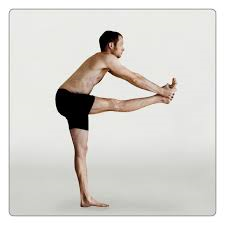
Ubbhaya Padangustasana


Dwi Hasta Padasana


This week's musical offering is.... The Quiet Ambient by All India Radio

This is a short mellow track good for accompanying slow stretches or cool-down poses, but it has a bit too much beat for Savasana.


Finally, this week's video .... be together, not the same :-)


May the path of yoga ease the way for you on your journey through the sunshine and shadows of life. Have a great week.

30 April 2016

The Beauty of a Weekend Retreat

Last weekend I had the pleasure of leading another retreat. This time it was a weekend one, from Friday evening to Sunday afternoon, and it was held at Florence House in Seaford, East Sussex right by the sea.

Although short in days, a weekend retreat can seem to offer you the gift of time in various ways:
  • it presents you with the time to pause in your busy routine to focus on yourself - no cooking or other household chores to do - bliss!
  • it makes it easy for you to put your yoga practice first - the 4 classes are scheduled in and, although attendance is not compulsory, you'll probably show up on the mat for each one, do more yoga than you would normally do in a weekend and maybe take your practice to another level as you try some poses that might not be so familiar to you.
  • the change of scenery (and I like to choose places to stay that offer a strong connection to the natural world) offers a chance to pause and take in the beauty of what the season, and the weather, has to offer - we notice more than we normally would, really looking at what's around us and savouring the experience.
  • we make new friends and reconnect with old ones as we come together with our shared interest in yoga - there is lots of conversation and lots of laughter (although there are opportunities for quiet introspection and we did do a silent meditative walk along the cliff tops, paying attention to each of the 5 senses, which was interesting).
Here are a few photos from the weekend:


our light-filled yoga room

silent walk

we found a little sheltered cove

my obigatory holiday headstand - with the Seven Sisters cliffs in the background 

Seaford Beach

If you'd like to join me at my next retreat at Florence House do send me and email and I'll send you all the details - it's taking place from 14-16 October 2016 and costs £360, to include all yoga, food and accommodation.


a view of Florence House


Well that's all good and lovely, but what about when life doesn't flow smoothly? Here are some wise words from Leo Babauta about dealing things when the going gets tough....as it inevitably will at some point...

How to Handle the Difficult Times

By Leo Babauta from zenhabits.net

Sometimes, life just wallops us against the head, deals us with such a blow that it takes our breath away.

A loved one dies, you lose a job, someone you care about gets sick, your car gets totalled, or hopelessness hits you.

What do we do when the world around us crumbles, when we can’t seem to find a way out?

The times when things are falling apart are exactly the best times to practice mindfulness and compassion. These are the times we’re preparing for, in a way, when we meditate regularly with mindfulness and compassion, during the non-traumatic times.

The times when the world is collapsing are the richest areas of exploration, and when we need the tools most.

So the way to work with these times is this:

Stay with the pain. Don’t run from it, don’t try to do anything about it, but face it with courage.

Stay with the bodily feeling, dropping below your story, and smile at it, be friendly with it, have the braveness to just be with it like you would with a friend who’s hurting.

Do it in small doses if that’s all you can handle. Do it with patience, noticing that your mind wants to run. Keep coming back, and you’ll earn trust in yourself to stay with the hard feelings.

Eventually, you see that the feelings aren’t so bad, that you can stay with them and the world won’t end, that they’ll go away like a passing cloud, that these feelings and thoughts aren’t you but just passing phenomena. You’ll start to take them less seriously, see that they’re No Big Deal, hold them lightly, give them space in your mind.

When the world is falling apart, this is the time to practice.


Your questions answered....What is a mala? 

On our weekend retreat my fellow teacher Suzie used a mala to help with the meditation we were doing. A mala is a string of beads used to help keep count during a mantra meditation (see my recent post explaining mantras here). 

Malas have been used for hundreds of years to aid focus during meditation, much like prayers beads. Traditionally made from Rudraksha seeds, there are usually 108 round beads on the string (108 is an auspicious number in yoga). There is one slightly larger bead to which a tassel is attached - this is the guru bead.

Here's how you would use a mala:

Sit in a comfortable seated position, set an intention for your meditation and choose your mantra.
Lay the beads across the right hand, resting over the middle finger, with the thumb on the guru bead.
Recite your mantra, then push the next bead along until it's under your thumb and recite again. And so on, until you have fed all the beads through your fingers and arrived back at the guru bead - you have recited your mantra 108 times. 


my mala beads

This week's recipe is .... Spring Vegetable Lasagne - the Jamie Oliver way

I made this dish for supper with friends recently. It was quite straightforward to do (even though it took a bit longer than the promised 30 minutes) and it tasted really, really good.There is cream in this recipe (single cream is around 18% fat as opposed to double cream which is around 48% fat - big difference!). I'm currently doing lots of reading into the benefits of good fats in our diets and, while I eat as healthily as I can most of the time, I feel it's ok to eat what you like every now and again and not worry about, or regret, occasional indulgences (such as a bit of cream in your lasagne).

This recipe makes a very large lasagne - enough for 6-8 portions. I used half measures of everything and served 4 with a salad and some roasted vegetables.


You will need:

A bunch of spring onions
6 cloves of garlic
700g asparagus
500g frozen peas
300g frozen broad beans
Large bunch of fresh mint
300ml single cream
1 lemon
300ml vegetable stock
500g cottage cheese
2 packets of fresh lasagne sheets (12 sheets total)
Parmesan cheese
Fresh thyme (or a pinch of dried thyme)

Here's how to make it:

  • Preheat the oven to 200°C.
  • Heat the oil in a very large saucepan. 
  • Finely slice the spring onions, crush the garlic and fry gently for a few minutes.
  • Trim the pointed tips off the asparagus and put aside (they'll be going on the top of the lasagne later). Trim the other end and slice into small pieces. Add to the pan and fry gently for 5 minutes.
  • Add the frozen peas and broad beans, season with salt and pepper and add the chopped mint leaves.
  • Stir in the cream (but keep a couple of spoonfuls aside to mix in with the topping later) and the grated zest of half a lemon.
  • Cook gently for a few minutes then mash everything up using a potato masher to create a bit of texture. Cover with the vegetable stock and bring to the boil before adding 250g of cottage cheese.
  • Stir and cook gently for a few more minutes.
  • Then remove from the heat and spoon a quarter of the mixture into a large, deep dish. Layer a lasagne sheet on top of the mixture, followed by a generous grating of parmesan cheese.
  • Repeat the layers of vegetable and lasagne sheets until you have used all of the filling and then top with a final sheet.
  • Mix the remaining 250g of cottage cheese with the remaining cream and spread over the lasagne.
  • Drizzle olive oil over the asparagus tips then place on top of the lasagne.
  • Sprinkle on some thyme, some more parmesan and a final drizzle of olive oil.
  • Bake in the oven for around 15 minutes until the topping has browned and you can see it bubbling. Check halfway through that the lasagne isn't too dry and the edges aren't curling up. If it is, add a little water and press the edges back down again.
  • Serve with a salad.


This week's musical offering is Long Time Sun by Snatam Kaur. I played this in the Restorative Class at the retreat - so beautiful and so relaxing :-)


This week in the garden.... Everything is growing so fast and everywhere I look there is something that needs doing! I haven't managed to get outside for more than 1 hour to do a spot of weeding in my very overgrown cut-flower patch... sigh...  However, I have booked myself in for a day in the garden on Sunday! Come rain or shine I will be out there and I will hopefully have a little bit more to 'show and tell' next week :-)


A shot of my diary for this weekend

A bit about anatomy... spotlight on the psoas muscles

I often talk about the psoas muscles in my yoga classes, and how important it is to stretch them out, especially if you sit for a large part of the day. But I find it quite hard to describe these muscles as they're deep within the body, right up close to the spine descending down through the pelvic bowl to join to the inner thighs. As you can't see them at all or manipulate them with your hands getting an idea of their situation can be a little elusive. I've just come across this great graphic (from www.bandhayoga.com - a great website if you're interested in anatomy) which shows you the psoas muscles (collectively called the iliopsoas) in clear detail - I hope it helps you picture it now. Below it are pictures of two postures which are really good for stretching the psoas muscles out - do them regularly and you'll improve your posture,stabilise the spine and therefore ease low back pain.

1) psoas major 2) psoas minor 3) iliacus 4) iliopsoas (at tendon attachment to the lesser trochanter)


Finally, here's an inspiring video showing how you don't need anything to be a certain way before you start yoga. I often hear people say 'I'm too stiff and inflexible to do yoga'. I try and tell them that, if they just start from where they are and keep practicing the poses, the magic of yoga will happen - transformation occurs as a side-effect of a regular practice.