6 October 2014

Why Losing Your Balance is Good For You


I spend most of my time working in physical therapy and yoga studios and hear this statement at least once a day. And every time I do, I have to shake my head in disagreement. If this sounds like you, I'll tell you what I always tell my clients: "You are all good enough and totally capable to practice with what you already have."

So whether it's finding your way into that yoga pose, or getting your footing in the exercise you don't think you're capable of doing, I assure you that your overall balance will improve as a result. All you have to do is try!

Here are some great reasons to start exploring and challenging your balance right now:

1. As we age our balance declines.
Many of us are well-aware of the recommendations for cardiovascular training and maintaining muscular strength for optimum health. But maintaining good balance is just as important. Poor balance can lead to a whole host of problems, including falls.

Particularly in older age, once a fall occurs, it can have a downward spiral effect on your health, and there is a high chance you will fall again, increasing your likelihood for further injury. As you age, your bones become weaker and the healing and recovery process takes longer.

Worse, you can develop a fear of falling, which leads to a fear of moving. Continuing to move is vital to your health because moving is medicine. Being able to maintain your ability to balance is key in being able to move in a functional, healthy way. Again, the only way to maintain this is by challenging your balance.

2. Losing your balance helps to improve your balance.
Your balance is controlled by three systems: vestibular, somatosensory, and visual. These three systems closely interact to keep the center of gravity over your base of support, and to keep you upright.
  • The vestibular system is located in your inner ear. This complex system controls your spatial orientation, mainly the position of your head, when you are in motion, and in which direction you are moving. It also helps to maintain equilibrium. This is actually the first system to decline as you age.
  • The somatosensory system receives input from the sensory organs in your skin and joints about the position of your limbs and body in space. This information travels to the brain where it is integrated with other sensory information so you can react accordingly.
  • The visual system is the system you depend on the most. Since humans are visual creatures, much of our experience in the world is determined by how our brain interprets the sensory information from the visual organs. Once vision starts to worsen, particularly later in life, your ability to compensate and adapt to these changes worsens.
The process of these three systems interacting along with other factors including reaction time, cognition, and the environment allow you to react in a quick, efficient manner to the challenges your balance faces on a daily basis.

Not only does challenging your balance work these three systems, but it also helps to improve the neuromuscular connections so you will be able to react quicker. And even better, it challenges your muscles in a functional manner and this will make you stronger.

3. Maintaining your balance keeps things interesting!
If every time you stepped onto your yoga mat you were able to nail every movement or pose in the same exact way, you would not be challenging yourself to improve, and it would get very boring.

Everyday your balance is so different — sleep, diet, and fatigue all have an affect. Some days you might require more support on your mat, and the next day you might nail every movement and you feel like you’re flying. But the goal shouldn’t be about nailing a pose or doing a movement in the same way every time. Your body is working with what it has on that day, in that moment. Exploring where you are now and how to react with each movement keeps things exciting and keeps you interested.

And yes, some days you will fall and crash, and in those moments, I have found, laughing at yourself is usually the best reaction.

4. Balance is a reflection of how you react in life.
You have very little control over many things in life, including your balance, which is greatly influenced by external and environmental factors. In fact, you might lose your balance daily. But once you let go of trying to control the uncontrollable factors, you can put that energy towards the factors you actually can control.

One thing you can control is how you react — in a healthy, productive manner. If you lose your balance, and even fall, you can react by tensing up or you can try staying open and relaxed. If you react with tension, you will likely fall hard and possibly injure yourself. But if you stay relaxed and open, you can fall soft and in the process, discover some pretty amazing things about yourself. So ask yourself, do you want to react in life with resistance, force, and stiffness, OR, do you want to react with ease and grace, and maybe even a little humor?

Everyday when you walk down the street, get on your yoga mat, or go for that run, you are relying on your balance to stay upright. It is important to keep the three systems that determine your balance healthy and working efficiently. Next time you try that challenging pose or exercise, or whether you just close your eyes, pay attention to how you react. You have the ability to react gracefully and find your own way to balance yourself, you've got to just keep working at it!

This Week I'm Making... Courgette Spaghetti

A couple of weeks ago one of my students told me about her new vegetable spiraliser and her new favourite dinner, courgette spaghetti. It sounded great: no pasta involved, just noodles made from courgettes - easy, nutritious and gluten free. Later that week I was scrolling through the recipes on www.deliciouslyella.com and there it was again! Online research into vegetable spiralisers ensued. I wasn't sure that I wanted another kitchen gadget - and they're not cheap either - so I opted for the small and slightly less expensive Zoodle Chef (£17.99). It's a cylindrical grater into which you twist the courgette, and out of which comes noodles!


Here's the recipe to make this dish, which is now my new favourite too! Thanks for the inspiration Sharon :-)


Ingredients:

1 medium sized courgette per person
A pinch of sea salt
A tablespoon of olive oil
A jar of pasta sauce
Some tasty toasted seeds to sprinkle on top (see my very first blog post for the recipe)

Directions:

Heat the pasta sauce. Using your spiraliser or ZoodleChef shred the courgettes into noodles. Add a pinch of salt. Stir fry them in the olive oil for a couple of minutes only. Transfer to a plate, add the pasta sauce, sprinkle with the tasty toasted seeds and voila!


This Week I'm Visiting...Switzerland, France, America, Peru, Estonia, Menorca, Turkey, Bali, Japan, Austria, Amsterdam, Finland and Space...from my armchair


We are constantly fed bad news via the media. Every day - war, disease, murder, destruction of the planet. Although we need to know what's going on in the world there's little balance. We're rarely shown the good people, the communities that work together, the beauty of our natural environment and, when we are, the good news stories are offered as novelties rather than the norm. The amazing photos in the link below remind us what a wonderful world we live in - they are an antidote to bad news. Savour them, soak them up and re-balance your world view.


This Week I'm Picking... Michaelmas Daisies

The Michaelmas Daisies have been shining like jewels in my garden for the last 3 or 4 weeks now. Their vibrant colours are lighting up the borders and the windowsills. They're really easy to grow, just needing cutting back in late autumn and dividing in the spring. They can, however, suffer from mildew, with some varieties succumbing more than others, so if you buy some check the label to ensure that they are one of the more resistant types.


And finally, I'm sharing this photo of Maggie B's beautiful home-grown Alstroemerias:


22 September 2014

Why It's Good to "Let Go" and How To Do It

You might be familiar with the words "let go" as they are often referred to during a yoga class. Maybe at the beginning when you might be asked to "let go of anything about your day that doesn't serve you" and also at the end, as you sink into Savasana, you might hear "relax and let go completely". But what do these two words really mean? What exactly do you let go of and how can you actually do it?

This article provides some insight:

18 Fantastic Ways to Let Go

by  via MindBodyGreen
It’s been said that the dharma teachings can be summarized in two words: let go. Letting go is the ultimate zen habit we all must master, sooner or later. Letting go has also become somewhat of a cliche and is often misused in spiritual contexts. But it is the single most powerful, simple (not easy) skill we can cultivate in life. Let’s take a deeper look at what letting go isn’t and is—and some concrete ways to practice it.

What Letting Go Isn’t: 


Letting go isn’t just cliche spiritual advice. Letting go isn’t not caring. Letting go isn’t passive. Letting go isn’t merely saying, “It’s all good” or “whatever.” Letting go isn’t lazy. Letting go isn’t giving up. Letting go isn’t the easy way out. Letting go isn’t always fun. Letting go is the most courageous thing you can do.

Letting go is wise. Letting go enables life, energy, love and learning to flow freely. Letting go takes practice. How can we turn it into a revolutionary daily life practice? Here are 18 ideas for starters. May they be of benefit.

1. Let go of procrastination.

Raise your hand if you procrastinate a lot. I know I do. Procrastination is based in fear: of failure, of success, of sharing our stories, of what other people will think. Let go of these fears and take action. Just do it. All we have is now. Quit procrastinating.

2. Let go of going to extremes.

Walking the Middle Path isn’t easy. Trust me; I know. In my twenties, I was a manic-depressive Gemini yoga-teaching partier who thrived on extremes. But as I’ve aged, I’ve gotten more in touch with my inner Libra, and I believe balance is a worthy intention for daily life. The middle way is balance. Pema Chodron writes, “The middle way is wide open, but it’s tough going, because it goes against the grain of an ancient neurotic pattern that we all share. When we feel lonely, when we feel hopeless, what we want to do is move to the right or the left. We don’t want to sit and feel what we feel.”

3. Let go of clinging.

The opposite of letting go is clinging, grasping, clutching. See how softening your grip, opening your palms and relaxing brings peace and ease into your body and mind. As Buddha teaches, “You can only lose what you cling to.”

4. Let go of complaining.

And meditate on humility. “Remember you don’t meditate to get anything, but to get rid of things. We do it, not with desire, but with letting go. If you want anything, you won’t find it. You won’t be able to find it. But when your heart is ready, peace will come looking for you.” ~ Ajahn Chah

5. Let go of comparing yourself to others.

When judgment, superiority, inferiority, jealousy and envy arise, see them as poisonous and let them go. “Problems are rooted in ideals. Let go of the ideals. Not easy, but letting go of ideals, accepting reality and acting appropriately and with compassion can be practiced.” ~ Leo Babauta from Zen Habits (whose free ebook on letting go is what inspired this post)

6. Let go of busyness and multitasking.

Take time to just drink a cup of tea and be. The world will go on. Meditate. Make letting go a practice in itself. Set aside some time every day to sit and focus on letting go—of thoughts, feelings, ideas, memories, plans, physical sensations—simply letting go of whatever arises in the consciousness and returning to the breath, over and over, each time the mind wanders away. “Just go into the room, sit in the center of the room, open the doors and windows, and see who comes to visit. You will witness all kinds of scenes and actors, all kinds of temptations and stories, everything imaginable. Your only job is to stay in your seat. You will see it all arise and pass, and out of this, wisdom and understanding will come.” ~ Ajahn Chah

7. Let go of clutter and excess.

Get rid of excess stuff. The process of letting go of material things can be both painful and joyous, because lots of our things have both sentimental value. Giving stuff away is a simple yet intense process involving both loss and liberation. “Look at your own mind. The one who carries things thinks he’s got things, but the one who looks on sees only the heaviness. Throw away things, lose them, and find lightness.” ~ Ajahn Chah

8. Let go of trying to control others.

Recognize the difference between influencing someone and changing them. You can do the former; the latter is impossible. “Let go of wanting to control people, of wanting to change them. Instead, focus on yourself and be the shining example. Be the compassionate center.” ~ Leo Babauta

9. Let go of illusion and delusion.

See the damage done by hanging on (and being dragged). “Seeing the harm (of not letting go) allows us to let go, because we have a choice: hold on to the idea of the past and suffer, or let go and accept reality as it is, and suffer less.” ~ Leo Babauta

10. Let go of negativity.

Notice signals of clinging such as irritation, anger or fear. Notice the ideal or expectation to which you are clinging. See the harm in holding onto this negativity. Let go, with love and compassion.

11. Let go of the guru.

“Wisdom is in yourself, just like a sweet ripe mango is already in a young green one. You are your own teacher. Investigate yourself to find the truth—inside, not outside. Knowing yourself is most important.” ~ Ajahn Chah

12. Let go of who you think you are.

“When I let go of what I am, I become what I might be. When I let go of what I have, I receive what I need.” ~ Tao Te Ching

13. Let go of attachment to the plan.

“We must let go of the life we have planned, so as to accept the one that is waiting for us.” ~ Joseph Campbell

14. Let go of the demons from your past and the worries about your future.

"Breathe. Let go. And remind yourself that this very moment is the only one you know you have for sure." ~ Oprah Winfrey
15. Let go of certainty.

Because we just don’t know. And that is a beautiful thing. “Creativity requires the courage to let go of certainties.” ~ Erich Fromm

16. Let go of the illusion of control.

“But the attitude of faith is to let go, and become open to truth, whatever it might turn out to be.” ~ Alan Watts

17. Let go of what’s gone to let in the now.

“Let come what comes, let go what goes. See what remains.” ~ Ramana Maharshi

18. Let go of trying to let go.

Just let it happen. “Letting go” can’t be taught or explained, only experienced. It is not a numbered list or a step-by-step process like the stages of grief. Life is not neat and tidy. Things get emotional, dramatic, messy. “Letting go” is an awesome intention and a beneficial practice. But it isn’t easy. Take it moment to moment, day by day. “If you let go a little, you will have a little peace. If you let go a lot, you will have a lot of peace. If you let go completely, you will discover complete peace.” ~ Ajahn Chah

This Week I'm Making...Easy Gluten-Free Granola

By Vanessa Vickery via MindBodyGreen

This granola is the perfect replacement for cereal and is gluten free and suitable for both Paleo and vegan. You can make it on the weekend and have it for your breakfast during the week. The best thing about this granola is that will form clusters and will not get soggy when you add milk.


Ingredients:
  • 4 cups nuts (I used macadamias, cashews, pecans and walnuts)
  • 1 cup shredded coconut
  • 1 cup dried fruit (I used cranberries and apricots)
  • 1 cup seeds (I used pumpkin and sunflower seeds)
  • 1/4 cup coconut oil
  • 1/2 cup organic maple syrup
  • 1 tsp. vanilla extract
Directions:

Preheat the oven to 150 degrees Celsius (300 Fahrenheit) and line a baking tray with baking paper.

Add nuts to a blender and pulse a few times to chop the nuts. I suggest adding a cup at a time if you have a high speed blender, otherwise you may end up with more of a nut meal.

Add the nuts, seeds, shredded coconut and dried fruit to a large mixing bowl.

Melt coconut oil in a small saucepan on low heat, remove from heat and add maple syrup, whisking to combine. Add vanilla extract and stir through.

Pour into the mixing bowl, stirring well to combine.

Spread the granola mixture on the baking tray and cook for approximately 30-35 minutes, turning every 10 minutes. (Thrive Yoga Lifestyle's note: my first attempt was a little too well done! On the second go I found 20 minutes cooking time was enough)

Remove from the oven and let it sit for 20 minutes or until hardened. Break into chunks and enjoy on its own or with coconut or almond milk.

This Week I'm Visiting...Holland & Barrett

It's the final week of Holland & Barrett's Buy One Get One Half Price offer, so I'm off to stock up on all the good stuff I need for a healthy lifestyle. I love the Dr Organic Vitamin E Body Moisturiser and Body Wash - it smells lovely and I like to feel that I'm not putting harmful chemicals on my skin. I can get all the nuts and seeds I need there and the extra ingredients for next week's blog recipe - Gluten-Free Bread. I'm loving Almond Butter too at the moment (it's like Peanut Butter) and I'm sure some Neal's Yard Chocolate Coated Brazils will somehow find their way into the basket too! If you can't make it to a H&B shop this week, you can still take advantage of the offer by ordering online at http://www.hollandandbarrett.com/ and you'll get free delivery too on orders over £20.


This week I'm Picking...Cosmos


From this one packet of seeds which cost £2.25 I got all these:


and these:


Cosmos are well worth the bit of effort it takes to sow and nurture them for a few weeks before they get planted out in the garden. If I keep deadheading them, which I do only once a week (just snip off the dead flowerheads with scissors) they will keep flowering until the first frosts. Once they're finished that's it - they're annuals so won't come up again next year and they don't tend to self-see. So I will pull them up and put them on the compost heap where they will rot down into compost which will nourish the soil ready for when I sow and plant again next May. The cycle of life - it's magic!


Here are a couple more of photos from Thrive Yoga Blog readers. This time they're of home-grown flowers. Please keep sending me your photos to share - they're so beautiful and inspiring, and I hope you've had as much pleasure from growing and picking your own as I have.


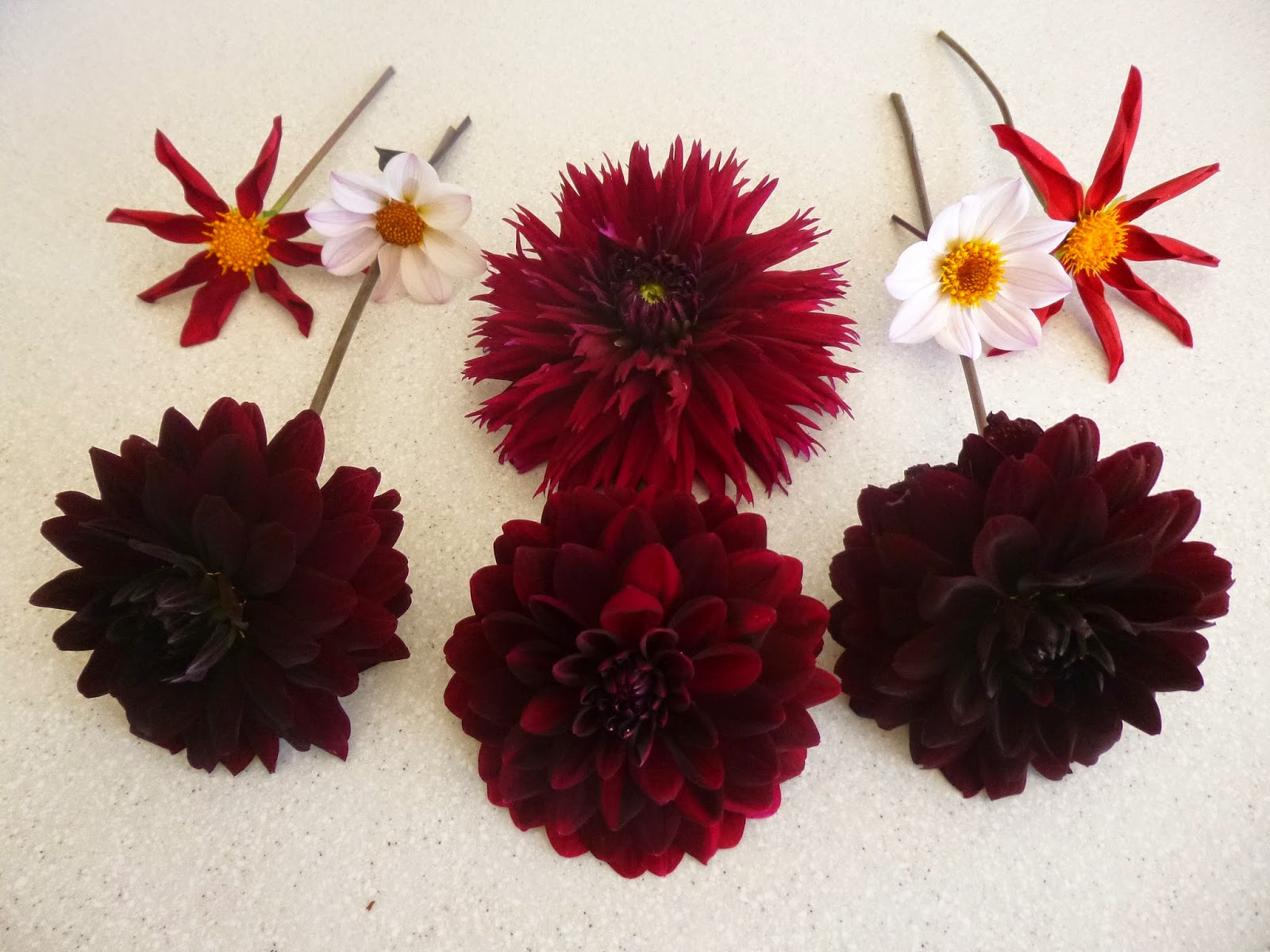
Sandra C's dahlias

Suzanne F's Sweet Peas

Finally, here's a link to a video clip about feet by US Yoga and Anatomy teacher Leslie Kaminoff. It's interesting stuff and it might inspire you to "let go" of our cultural habit of wearing shoes a bit and go barefoot. Click here to play the video then go out in the sunshine and feel the grass between your toes!


8 September 2014

It's been a while.....


.... since I last wrote a blog post! A lot has happened in the past two months - holidays, birthdays, exam results days, lazy days and many, many lovely warm sunny days.

Whilst holidaying at Lake Garda in Northern Italy, I learned to windsurf (sort of!). This was an enlightening experience! It's been a long time since I was a complete and utter beginner at something, and it was very humbling. There were times during the course when I wanted to give up because it was just too hard and I wasn't making progress, but the discipline I've learned from my yoga practice came in very useful and I was able to breathe, dig deep and see it through.

It gave me an insight into how it might feel for someone coming to their first yoga class, unsure about all the unfamiliar postures, transitions, Sanskrit words etc., and it was a reminder how important it is for a teacher - yoga, windsurf or any other type of teacher - to be patient and reassuring with their students and to give clear instructions.

It was a reminder too about the value of practice. Practice helps you build your skills, and to improve rather than stay the same. Practice helps you to travel along your chosen path. I struggled to stand up on my own two feet on a windsurf board just as I used to struggle to stay balanced upside-down in headstand. I practiced my headstands consistently and now I'm completely comfortable with them - steady and strong, and if I practiced windsurfing often I'm sure I would become comfortable with it too. As yoga master Sri K Patthabi Jois is famous for saying, "Do your practice and all is coming".


Holiday Headstand at Lago di Ledro

This Week I'm Making...No-Bake Energy Bites

I found this recipe on Pinterest and tried these yummy snacks this weekend. They have healthy ingredients, are really easy to make and they taste soooo good. They got the thumbs up from my friends too.


This week I'm Visiting...Triyoga Soho's new cafe

Triyoga Soho has had a refit. A new studio has been added complete with infra-red heating for hot yoga classes, the changing rooms are more spacious and there is now a lovely little cafe with a super-healthy menu. I tried a delicious chickpea salad and a beetroot and carrot salad and went for a Green Inversion juice (cucumber, celery, spinach, apple, lemon and ginger).


Triyoga Soho - in Kingly Court off Carnaby Street


What to choose??....


Green Inversion juice


This Week I'm Picking...

Verbena bonariensis, cosmos, fuschia, black elder and dahlias. There is so much late summer colour in the garden, with the dahlias still producing masses of flowers - keep picking and they'll keep flowering. 


This Week I'm Loving...your photos

Have you got a photo of yourself doing yoga in a stunning location that you'd be willing to share? Or a photo of a stunning location without the yoga that simply took your breath away? Send me your photos (email hi@thriveyoga.co.ukand I'll share them with our yoga community over the next couple of weeks.

Claire T saluting the sun as it rises at Stackpole Quay, Pembrokeshire
Claire T doing a mighty fine Revolved Triangle pose

Two beautiful pictures from Jacqui P's summer holiday


Kath rocking her Warrior II pose by a lake in Ireland

I've just noticed that all the above photos show earth, sea (or lake) and sky and it reminded me of this lovely quote:


And finally... A Tribute to BKS Iyengar

You may have heard that BKS Iyengar, the guru who brought yoga to the West, died a couple of weeks ago at the age of 95. He was a very well respected teacher and author and I, amongst many, owe him a debt of gratitude for his teaching.

His method of yoga focused on the correct alignment of the body and introduced the use of props such as blocks and straps to enable people of all abilities to practice the postures. I was trained by Ruth White who was one of Mr Iyengar's first western students in the 1960's, so my own classes have an Iyengar influence.

He was, apparently, a demanding and fierce teacher who expected a lot from his students. He was known for his eagle-eye and attention to every minute detail of the body's placement, and would correct a person's pose if even one finger was out of place. However, this level of discipline yielded so many transformations of health and mental attitude that his teaching spread far and wide, and is now practiced by thousands of people around the world. To this day, Iyengar yoga is synonymous with a strong asana-based practice, with correct alignment of the body being paramount.

He published one of the most important yoga books, Light on Yoga, which is found on the bookshelves of most yoga teachers as it is such a clear and succinct reference to so many postures. He has a teaching centre in Pune, India and his work will be carried on by his daughter Geeta and his son Prashant.


BKS Iyengar 1918-2014


One of Iyengar's most famous quotes


Picture Quote of the Week


24 July 2014

It's Time to Stand Up

This question in the Lifecoach section of the Sunday Telegraph last weekend caught my eye and I thought I'd share it with you. Even though, as a yogi, you're more aware of your body and your posture than many people, it's good to get a reminder every now and then.

Q : Like many people today, I seem to spend all day sitting down, whether I'm working at my desk or relaxing at home. I know this isn't the healthiest thing to do, and I'm starting to worry about my back, in particular. What do I need to look out for most, and can you please tell me how can I improve my posture?

A : If you spend all day sitting down, you are right, you should aim at least to do so with good posture to minimise the damage to your body.

To do this you need to start with a suitable chair. A good adjustable chair will permit you to change the height, back position and tilt. Adjust it so your lower back is properly supported, thereby reducing strain. Having your knees level with your hips will help you too.

If you use a computer, you need to make sure it is in the right place in relation to where you are sitting. Your screen should be at eye level, and you should aim, when using the keyboard, to have your wrists and forearms straight and parallel with the floor, thereby reducing the repetitive strain. You also need to place your feet on the floor with uncrossed legs. If you are not very tall, you might find a small foot stool helpful for this.

Avoid repeatedly stretching or twisting to reach things such as the phone by having them in easy reach. If you use a phone a lot, a headset would probably be good for you as well. Of course, good posture is about much more than just sitting. You must also consider how you stand, walk and lie. You are likely to have imbalances in your body since your posture today is a result of years of activity or inactivity.

I would suggest, if possible, finding a good Iyengar yoga class or, at least, performing one or two of their postures. This form of yoga places particular emphasis on detail and alignment. As a bonus, you grow stronger, too, as well as improving mobility and stability.

You say you spend all day sitting down, is there a way you could spend at least some of the time standing? You could probably easily manage 10 minutes of each hour standing up and still get your work done. This is a good mental break, as well as a physical one. 

If you are working from home, why not exercise by your desk? This can be as easy as doing push-ups, sun salutations and shoulder rolls beside your desk. Keep it even more simple by standing up and sitting down repeatedly 30 times. This is simple but effective.

There is probably some choice involved in your spending all day sitting down. In most work scenarios, sitting doesn't mean you can't move. Some companies are thinking laterally and introducing the notion of walkstation treadmill desks. There is limited early research suggesting a boost in productivity, and people are beginning to realise that humans need to move.

As a sort of compromise, why not consider sitting on a stability ball, instead of an office chair? Users need to engage their core muscles to sit balanced on the ball.

Pick your activity of choice and aim to move at least every hour. Set a phone alarm to remind you to move. Your posture will improve by moving more throughout the day.

This Week I'm Making... Pear and Mint Flavoured Water

As a person who doesn't feel thirsty very often, staying hydrated can be a challenge. I have a special red water glass that I leave out on the kitchen worktop all day so that each time I walk past it catches my eye and reminds me to take a drink. 

I don't drink fizzy drinks because of the sugar/sweetener and artificial flavourings, so mostly I drink plain water with a slice of lemon.

When I found the article below, I was immediately struck by a) how simple it is and b) why I hadn't thought to do this before.  I'm working my way through the list and am experimenting with my own flavours too. Pear and mint with lots of ice is very refreshing on a hot sunny day.


DIY: 8 All-Natural Ways To Make Your Water Taste Better Than Ever
We all know that we should drink more water. We also know the benefits of vitamins, but it can often be a struggle to get enough through food alone.

Naturally, it’s no surprise that we would want to combine these and get our vitamins and water simultaneously.

But instead of buying expensive flavored water products filled with artificial sweeteners and packaged in plastic bottles, did you know you can make your own natural vitamin water?

Here are my top eight recipes for natural vitamin water:
1. Lemon and cucumber
Mix in a pitcher: 10 cups of water + 1 cucumber and a lemon, thinly sliced + 1/4 cup fresh finely chopped basil leaf + 1/3 cup of finely chopped fresh mint leaves. Leave in the refrigerator overnight before serving.
2. Strawberry and lime
Mix in a pitcher: 10 cups of water + 6 strawberries and one thinly sliced lime + 12 finely chopped fresh mint leaves. Leave in the refrigerator overnight before serving.
3. Blackberry and sage
Mix in a pitcher : 10 cups of water + 1 cup of blackberries that have been very slightly crushed + 3-4 sage leaves. Leave in refrigerator overnight before serving.
4. Watermelon and rosemary
Mix in a pitcher: 10 cups of water + 1 cup of watermelon cut into cubes + 2 rosemary stems. Leave in refrigerator overnight before serving. 
5. Pineapple and mint
Mix in a pitcher: 10 cups of water + 1 cup of pineapple cut into cubes + 12 fresh mint leaves finely chopped. Leave in the refrigerator overnight before serving.
6. Apple and cinnamon
Mix in a pitcher: 10 cups of water + 1 cup of apple cut into cubes + 2 cinnamon sticks + 2 teaspoon of ground cinnamon. Leave in the refrigerator overnight before serving.
7. Pomegranate, blackberry and cherry
Mix in a pitcher: 10 cups of water + 1 cup of cherries (pitted) + 1/2 cup of blackberries + 1/2 cup of pomegranate seeds + pinch of Himalayan crystal salt. Leave in the refrigerator overnight before serving.
8. Strawberry, pineapple and pear.
Mix in a pitcher: 10 cups of water + 1/2 cup of strawberries + 1/2 cup of pineapple (sliced) + 1 cup of pears (sliced) + pinch of Himalayan crystal salt. Leave in the refrigerator overnight before serving.

Raise your glass and stay hydrated my friends!

This Week I'm Visiting... Loseley Park, Compton, nr Guildford, Surrey 

Loseley Park is a fabulous old manor house just off the A3, south of Guildford. The estate was acquired by the ancestors of the family who currently live there at the beginning of the 16th century. It is steeped in history - Queen Elizabeth I and King James I were both visitors -  and the rooms contain many beautiful pieces of art and furniture. It is used as a venue for filming and for weddings and has a calender of events ranging from dog shows to craft fairs.

I was visiting the Loseley Garden Show, and included in the ticket price was entrance to the Walled Gardens. Based on a design by Gertrude Jekyll, the Walled Gardens are laid out as a series of "rooms". There is a Rose Garden, a White Garden, an Organic Vegetable Garden and a moat. High summer is the perfect time to visit with the flowers being at their peak and, as a bonus, until 4th August there is a sculpture exhibition too.

There is a lovely little courtyard cafe which serves lunches and tea, but do check the opening times as, strangely, it's not open on Fridays or Saturdays. Take a look at the website here http://www.loseleypark.co.uk.


the back of the house

the Walled Garden


For interesting places to visit in and around London, this week's bumper issue of Time Out magazine (22-28 July) is packed with great ideas. There's an article on things to do on a very limited budget (lots of them are free) and there's a Kids Special section with outings ranging from water parks and lidos to what's on at the theatre and cinema. You can take a look at the listings online too at www.timeout.com


This Week I'm Picking... Buddleia 

I inherited two Buddleia bushes when I moved into my house - one light purple and one a deliciously darker shade. For about 3 or 4 weeks in summer they are full of flowers which the butterflies and bees go mad for. There are more than enough flowers to share though and I like to cut a few and put them in a vase to fill my kitchen with the scent of honey. The purple contrasts especially well with the bright orange of the calendulas which are flowering profusely. 

I remember Monty Don saying on an episode of Gardener's World, that if you deadhead the flowers as they go brown new, but smaller, ones will form on sideshoots. My buddleia bushes are about 8ft high - I'd better get the stepladder out.... :-)


14 July 2014

Breathe, Slow Down and Move with Awareness

Stepping onto the yoga mat is a reminder to breathe, slow down, and move with awareness. To help you on the journey down the path of yoga and mindfulness it can be useful to have some good guide books. Thich Nhat Hanh, a Vietnamese Buddhist monk, poet, scholar and human rights activist, has written over 100 books on meditation and mindfulness. Among my favourites are "Peace is Every Step" and "The Miracle of Mindfulness" from which this passage comes:

"People usually consider walking on water or in thin air a miracle. But I think the real miracle is not to walk either on water or in thin air, but to walk on earth. Every day we are engaged in a miracle which we don't even recognise: a blue sky, white clouds, green leaves, the black, curious eyes of a child, our own two eyes. All is a miracle."


Thich Nhat Hanh


There are a number of Thich Nhat Hanh's books available on Amazon, and if you want to find out more about him you can visit his website http://plumvillage.org/about/thich-nhat-hanh/, or take a look at this inspiring, powerful yet peace-filled interview he gave with Oprah Winfrey http://www.youtube.com/watch?v=NJ9UtuWfs3U

In my classes this week - the last before the summer break - I read the following passage by Thich Nhat Hanh as a reminder that our yoga is not just about the physical practice, and that we can bring mindfulness in to every aspect of our lives:

A Beautiful Continuation

When we look at an orange tree we see that season after season it spends its life producing beautiful green leaves, fragrant blossoms, and sweet oranges. These are the best things an orange tree can create and offer to the world. Human beings also make offerings to the world every moment of our daily lives, in the form of our thoughts, our speech and our actions. We may want to offer the world the best kinds of thought, speech and action that we can - because they are our continuation, whether we want it to be so or not. We can use our time wisely, generate the energies of love, compassion and understanding, say beautiful things, inspire, forgive and act to protect and help the Earth and each other. In this way, we can ensure a beautiful continuation. 

Dahlias that I planted as tubers in March, offering their flowers to the world

If you like the idea of offering your beautiful continuation to the world, the following article could help you bring more mindfulness to your day:

A 15-Minute Morning Ritual To Dramatically Reduce Stress
More and more people are finding a meaningful morning practice to be the solution. By adding this practice in between waking up and starting the day, you’re sure to move through the world more grounded and connected, things we’re all craving more of in today’s busy world. Often the morning practice includes some combination of writing, movement and stillness. I’ve seen in my own life and in the lives of my clients how incredibly effective a morning practice like this can be.

But what about the mornings when you wake up with racing thoughts and to-do’s first thing? Or the mornings where the thought of sitting on a meditation cushion sounds like torture? These are the days you skip your morning practice altogether, leaving you rushing through the day like you’re on a treadmill without an off switch. The days when 3pm rolls around and you’re eating a bag of chocolate chips mindlessly out of your desk drawer, worried a binge is just around the corner. For many people, dealing with stress through food is an everyday struggle. Skipping a morning practice only makes this struggle more difficult. In order to step into your day with more mindfulness, you have to begin to be intentional from the moment you open our eyes.

So, the next time you want to bail on your morning practice or if you’ve been wanting to get started with one and don’t know how, I invite you to try the below. I created a simple practice to help you move through the day without stress calling the shots.

1. Place 1 to 2 drops of grapefruit or wild orange essential oil in the palm of your hands.
Rub your hands together, moving them back and forth 10 times. Cup your hands over your nose and mouth and breathe in deeply for five rounds of breath. There’s no need to force a certain type of breath; allow your natural rhythm to flow in and out.

2. Grab a piece of paper, a pen and make a dump list.
Write out every single thing that’s weighing you down, stressing you out or taking up an unusual amount of space in your head. Get it out and let it go. Don’t worry about this being in your to-do list notebook or electronic calendar. If it’s important enough, it will find it’s way to your master system later.

3. Move your body for five minutes.
It really doesn’t matter what you do here; just move out of your head and into your body. Dance to your favorite song, roll around on the floor, jump on a mini trampoline, do some head rolls or shoulder shrugs, move in a way that feels good to your body and your natural rhythm.

By giving your body the chance to practice dealing with stress in a different a way you’re creating a new positive pathway. This simple morning practice can be done in 15 minutes or less from anywhere in your home (or even your office).

Try it and notice how it sets you up to move through your day more mindfully and intentionally, with less stress. If you don’t have 15 minutes, choose one of the three and start there. The most effective practices are the ones that find a place in your daily routine - they aren’t the ones you think you “should” do.


Building Your Home Practice This Summer

There can be many reasons for not practicing yoga at home. Lack of time comes top of the list, with not knowing which postures to do coming a close second. I can't help you with the first one - we all have the same 24 hours in a day and it really is your choice how you choose to spend them, but I can help with the second one. Here's a video of a 4 minute standing flow that might help you build your home practice. 

I recommend a few rounds of Sun Salutation to warm up, and always give yourself the gift of a few minutes of Savasana to finish. There's no instruction - just follow along. The sequence is: Warrior 2 (Virabhadrasana II), Reverse Warrior, Warrior 2, Extended Side Angle pose (Utthita Parsvakonasana), Warrior 2, Triangle pose (Trikonasana), Standing Forward Bend (Prasarita Padottanasana). You can repeat the sequence as many times as you like, adding other poses in as they come to mind. Each posture is held for 3 breaths. 

Click here or on the picture below to view the video and breathe, slow down and move with awareness. Namaste.